- As the body’s largest organ, your skin covers 22 square feet, makes up 15% of your body weight, protects you, regulates temperature, and hosts a unique microbiome—understanding it helps you care for it effectively⁵.
- Skin changes with age, hormones, and environment, so tailoring your routine to your type—dry, oily, combination, or sensitive—supports hydration, repair, and long-term health¹⁵.
- Hydrating ingredients like hyaluronic acid, plus antioxidants and omega-3s from plants and marine sources, help your skin stay resilient, healthy, and naturally radiant⁶.
Overview
Stepping into the world of skincare, we've got something for everyone. Whether you're just beginning your journey, refining your routine, or diving deep into the science of skin, this E-book is your companion to understanding and celebrating the skin you're in.
Skincare is more than a regimen—it's a lifestyle rooted in self-respect and science. It's a daily ritual that nurtures your skin's health and reflects your inner vitality. Think of it as a fusion of biology, chemistry, and care.
Let's start with the basics: your skin is the body's largest organ, covering about 22 square feet and accounting for roughly 15% of your body weight. It's your first line of defense against environmental stressors, regulates temperature, synthesizes vitamin D, and houses a diverse microbiome that's as unique as your fingerprint.
And yes, your skin is constantly working. It renews itself every 28 to 40 days, depending on age and health. During sleep, it enters repair mode—so those 7 to 9 hours of rest aren't just for your brain, they're for your glow too.
Skincare isn't one-size-fits-all. Your skin type can shift with age, climate, and hormones. That's why understanding your skin—whether it's dry, oily, combination, or sensitive—is key to building a routine that works for you.
This E-book is packed with evidence-based insights, practical routines, and empowering knowledge. We'll explore hydration, cleansing, diet, supplements, and even skin-lifting exercises. For example, hyaluronic acid, a common skincare ingredient, can hold up to 1,000 times its weight in water, making it a hydration powerhouse.
We'll also look at how bioactive compounds from plants and marine sources—like antioxidants and omega-3s—can reduce inflammation and improve skin conditions such as acne, eczema, and hyperpigmentation.
Globally, skincare is a growing priority. In 2022, the skincare market was valued at $131.2 billion, projected to reach $212.96 billion by 2032. That's not just beauty—it's science, wellness, and self-care converging¹.
So, let's begin this journey together. Not toward perfection, but toward understanding, consistency, and celebrating your skin's resilience. Because your skin deserves the best—and so do you.
Chapter 1
Skin Lifting Exercises & Routine
Skincare is frequently misunderstood as being synonymous with topical products—creams, serums, and lotions. While these formulations play a vital role in maintaining skin barrier function and hydration, this narrow focus often overshadows other essential components of skin health.
One such overlooked element is the role of facial exercises and skin-lifting routines. Skin-lifting exercises are not merely a cosmetic trend; they are grounded in physiology and dermatological science. These routines stimulate underlying facial muscles, enhance lymphatic drainage, and improve blood circulation, all of which contribute to a healthier, more vibrant complexion.
Emerging studies suggest that consistent facial exercise may improve muscle tone and skin elasticity, potentially reducing the appearance of sagging and fine lines. Incorporating these exercises into a skincare regimen reflects a holistic approach—one that recognizes skin as a dynamic organ influenced by both external treatments and internal activity.
Let's explore how these practices can be integrated into your routine to support long-term skin health and vitality.
Facial Exercises
You can help to keep your facial muscles firm and help prevent drooping of your features by devoting just 6 minutes a day to these exercises. Do each action for 6 seconds and repeat it 10 times.
It is important to keep the rest of the face relaxed while working on any specific area.

Horizontal forehead lines
Place the side of the forefingers gently but firmly against the forehead just above the eyebrows, allowing thumbs to rest lightly on cheeks. Raise the eyebrows against the resistance of the fingers.

Vertical forehead lines
Place the underside of the forefingers flat against the forehead just above the eyebrows. Pull gently toward the temples.

Mouth wrinkles
Place the hands flat on the cheeks with the fingertips touching the cheekbones and the wrists meeting. Gently pull toward the ears. Holding this position, say "you."

Droopy chin
Hold your head up straight, chin level, shoulders back and relaxed. Place your forefinger horizontally between your teeth. Push your tongue against the roof of your mouth while keeping your teeth touching your finger.

Neck 1
With your mouth half open, place your palms under your jaw and curve your fingers around to rest lightly on the side of your cheekbones. Try to open your mouth against the resistance of your hands.

Neck 2
Place one hand flat on your forehead and the other on your chin. Move your head forward against the resistance of your hands, keeping your shoulders straight and relaxed.
Source: PhysioDiaries-GH
Face Yoga – 6 Simple Exercise
Lion Face - 3 Reps

- Look straight ahead with your shoulders relaxed.
- Take an inhale through your nose and scrunch up your entire face.
- Then, exhale as you stick your tongue out and open your eyes wide. Make sure there are no wrinkles in your forehead.
- Repeat three times.
Forehead Smoother – 20 reps

- Place your fingers on either side of your forehead, with your pinky fingers resting below your eyebrows and your other fingers stacked above.
- Apply gentle pressure with your fingers, to act as muscle resistance.
- Lift your eyebrows up a little and then release.
- Repeat for 20 reps.
Under-Eye Stretch – 3 reps

- Look straight ahead with your shoulders and forehead fully relaxed. Place your hand on the top of your forehead to keep it smooth.
- Open your mouth to create an O shape. Without moving your forehead, look up. Hold for 5 seconds.
- Then, return to a neutral facial position.
- Repeat two more times.
Marionette Line Remover – 3 reps

- Sit with your head looking straight. Curl your upper and lower lip inward towards your teeth. The area between your nose and your upper lip should be smooth.
- Slowly turn your head to one side. Then, bring your head back to center and turn to the other side.
- Turn side-to-side twice more, keeping your forehead relaxed the entire time.
Cheek Lifter – 3 reps

- Take a deep inhale, then puff air into your cheeks while keeping your mouth closed.
- Swish the air back and forth from cheek to cheek.
- Take a big exhale through your mouth.
- Repeat for a total of three times.
Giraffe Neck – 3 reps

- Sit up with a tall spine and relaxed shoulders.
- Lift your chin up, then turn your head to the right so it is up at a 45-degree angle. Pucker your lips and hold for three seconds. You should feel a stretch on the bottom left side of your jaw.
- Move your head back down to center and repeat to the left.
- Then, move your chin back to center and lift it up. Pucker your lips and hold for three seconds, then release.
- Repeat two more times.
Source: blog.paleohacks.com
Chapter 2
Incorporating a Healthy Diet for Skin
You are what you eat! This statement is absolute when it comes to achieving radiant and youthful skin. Incorporating a healthy diet for the skin is the foundation for effective skincare that leads to flawless beauty.
Let's see how you can nourish skin inside out; that's where the actual magic happens:
Here's a quick overview of what you should include in your diet!⁵⁶⁷⁸⁹¹⁰
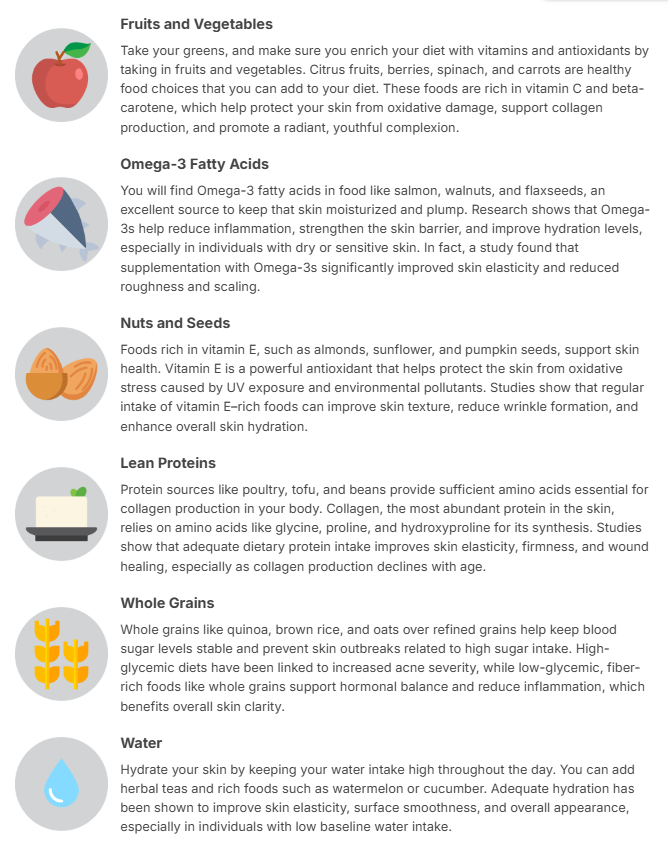
The Healthy Plate For Flawless Skin
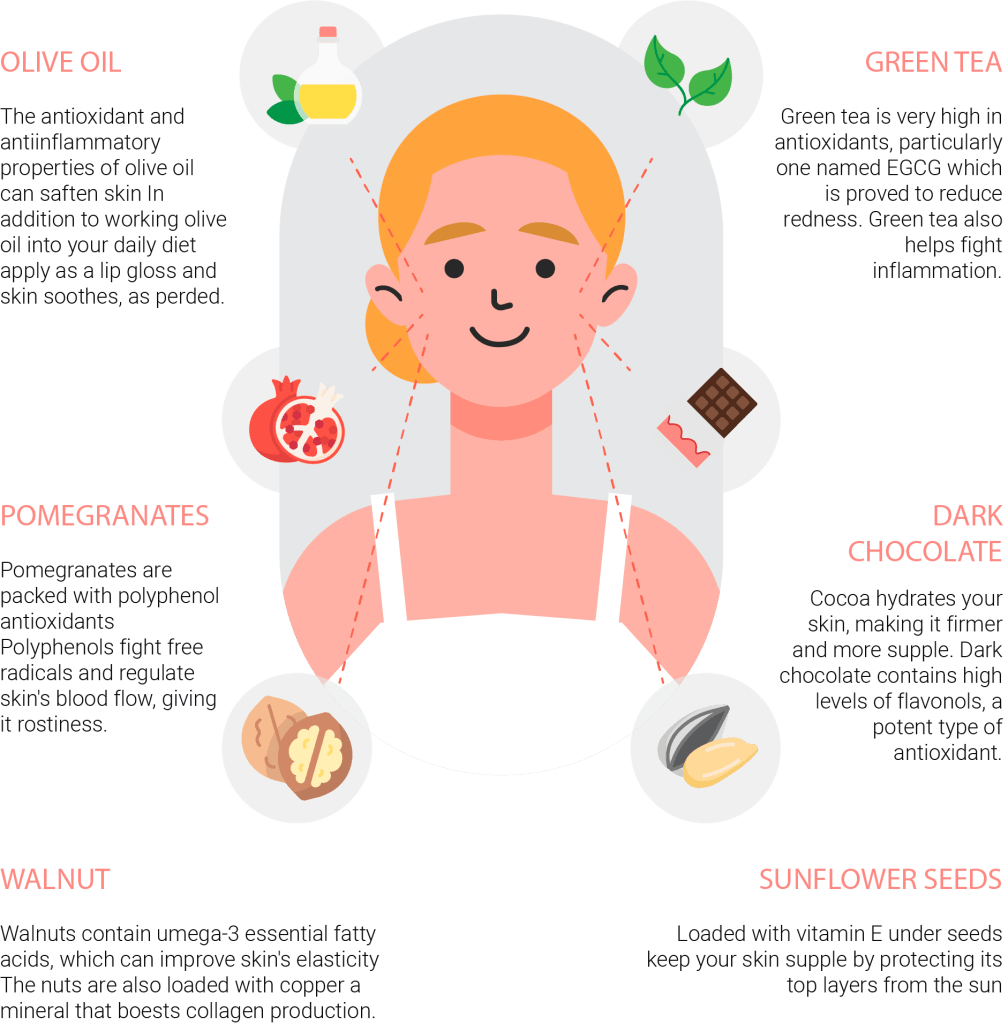
Source: YourNutrionalTherapist
If You Have Acne
Diet to improve skin condition
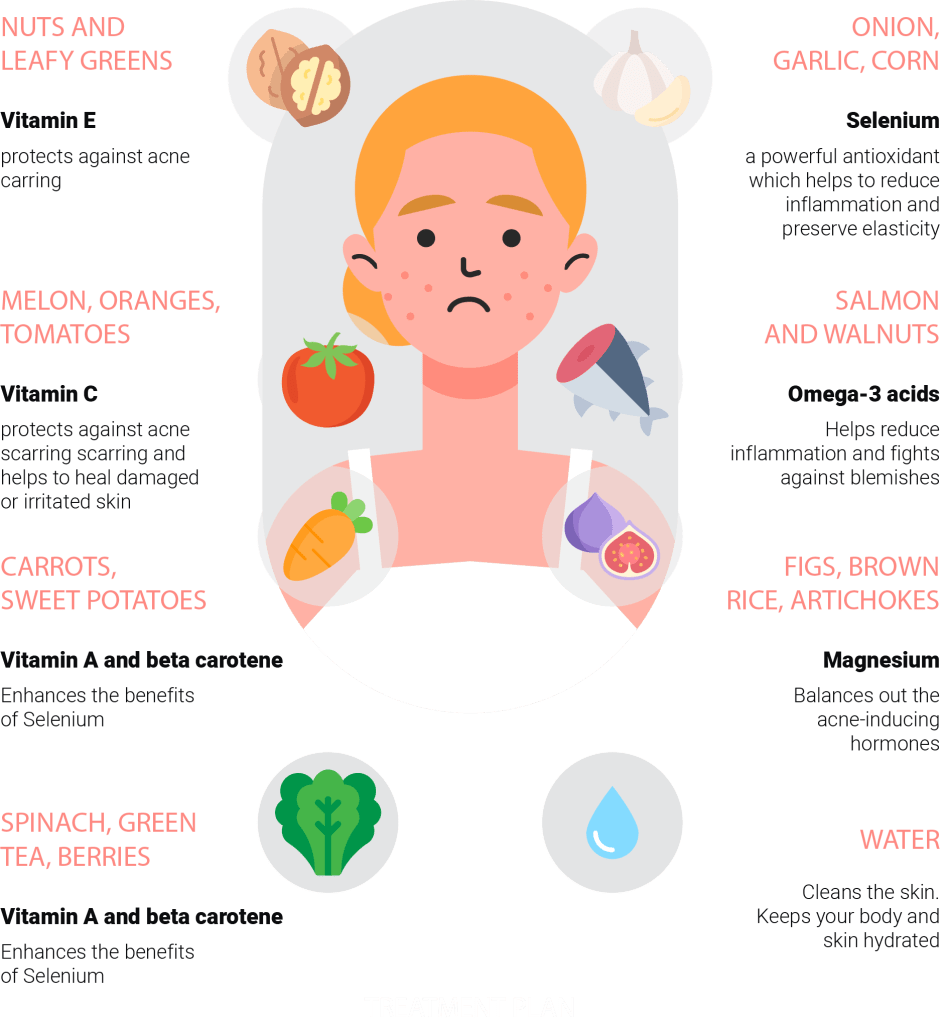
Treatment Plan
- Don’t pick – this could cause scarring
- Don’t over wash – this will aggravate your spots
- Choose oil-free cosmetics
- Diet and Exercise
Most Easily Available Fruits For Glowing Skin
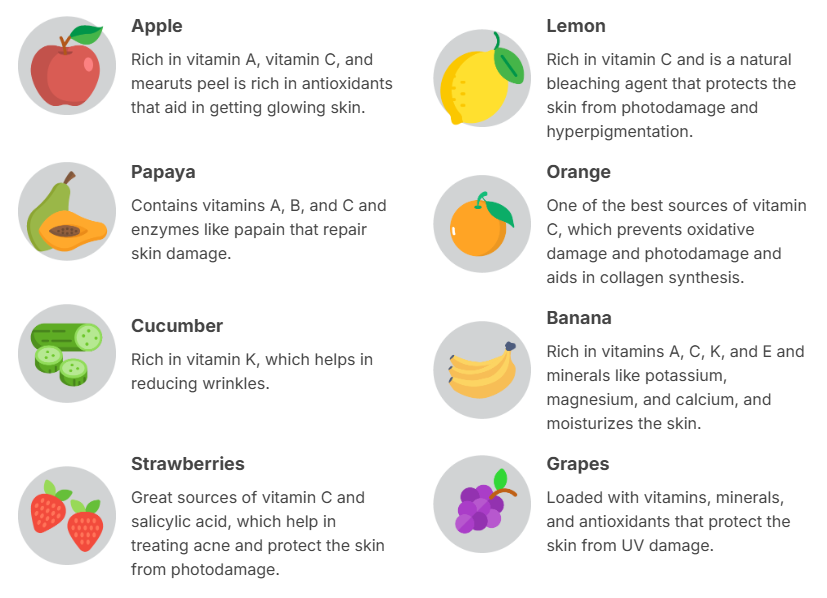
Source: stylecraze.com
Chapter 3
Understanding Your Skin Type
Everyone has a unique skin type and texture when discussing skincare, so no one size fits all. Understanding your skin type sets the base for glowing and healthy skin, the cornerstone of good skin care.
Once you know your skin type, you can make informed choices, maintain the skin's health, and address concerns unique to your skin type. You may have oil, dry, combination, or sensitive skin, so you must recognize the skin type before achieving healthy and vibrant skin.
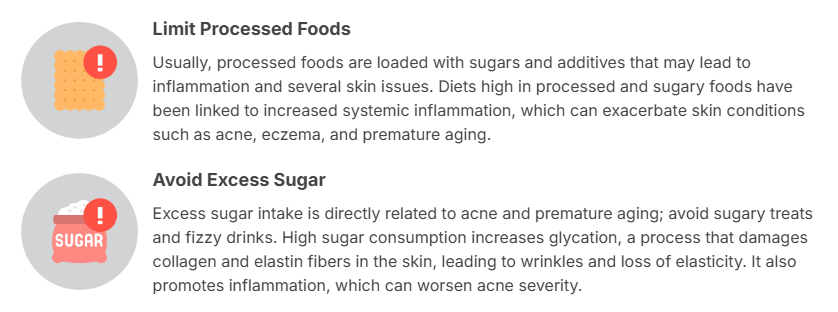
Before we move on to discussing the significance of understanding your skin type, let's have a look at foods to limit when striving for good skin¹¹ ¹²:
What's your skin type?
The first step to good skin is to know what your skin type is.
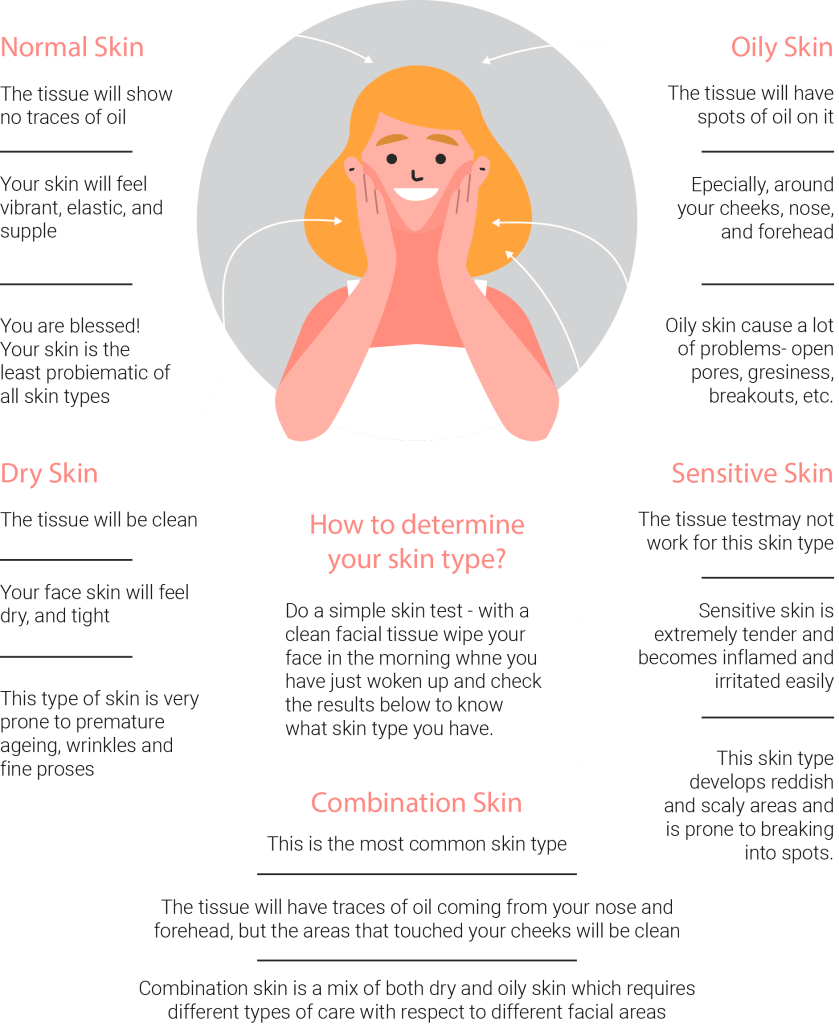
Source: mybeautynaturally.com
Dry Skin
Characteristics of dry skin include:
- Rough or flaky texture.
- Tightness/lack of elasticity.
- More noticeable fine lines and wrinkles.
- Redness and irritation.
- Barely visible pores.
If you have dry skin, choosing the right moisturizer is incredibly important. You may benefit from using a thick ointment, or even a combination of ointment and lotion, with a focus on the areas that are typically the driest.
It is also important to note that your skin should be damp when applying your moisturizer, for it to properly lock in moisture. As far as makeup goes, you should ideally use a liquid foundation that contains moisturizer.
Oily Skin
- Characteristics of oily skin include:
- Enlarged pores
- Shininess or greasiness
- Less visible fine lines and wrinkles
- Prone to acne
- Does not hold makeup well.
There is a common skincare myth that if you have oily skin, you shouldn't use a moisturizer. That is not the case.
If you have oily skin, you should use a lightweight, oil-free moisturizer. In terms of makeup, a powder foundation or an oil-free liquid foundation will likely suit you best.
Oily skin often doesn't hold makeup very well over time; and therefore, it will also be helpful to utilize primer, as well as setting spray or powder, to prevent wear and smudging.
Combination Skin
Combination skin, as the name implies, has characteristics of both dry and oily skin. Typically, in this case, your T-zone will be oily, while other areas of your face are dry.
One option for combination skin is to use different products (such as moisturizers and foundations) for the dry and oily sections of your face. However, it is possible to find products that are specifically made to suit combination skin, if you would like to avoid the hassle and expense of using different products.
Acne-Prone Skin
The primary indicator of acne-prone skin is of course acne, blackheads, and blemishes. Additionally, acne-prone skin often goes hand-in-hand with oily skin.
Many people with acne-prone skin can benefit from oral or topical medications, which is something you should discuss with your doctor. But there are a few other things you can do as part of your routine to manage acne-prone skin, including:
- Regularly wash your face with a cleanser that is formulated for acne.
- Use a toner.
- Use an oil-free moisturizer.
- Use powder or oil-free liquid foundation.
- Look for non-comedogenic products.
Sensitive Skin
Characteristics of dry skin include:
- Itchiness, stinging, burning, or agitation.
- Redness, rashes, or blemishes.
- Allergic reactions.
- Roughness or flakiness.
- Sensitivity to sunlight.
When it comes to sensitive skin, there is often a lot of guess-and-check involved. You will need to find products that don't aggravate your skin, and therefore, it will be helpful to sample products before you buy a larger size.
Typically, the products that work best for people with sensitive skin are fragrance-free, hypoallergenic, and contain SPF. It will also be helpful to wash skin carefully, rather than scrubbing.
Mature Skin
Mature skin refers to skin that has changed texture, appearance, or other traits as a result of aging. These changes may include:
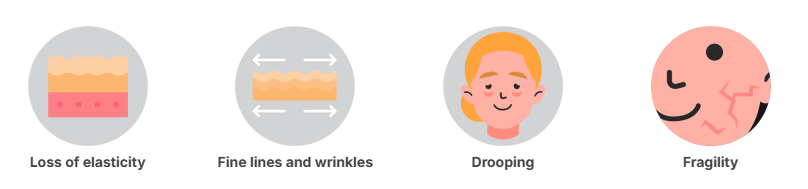
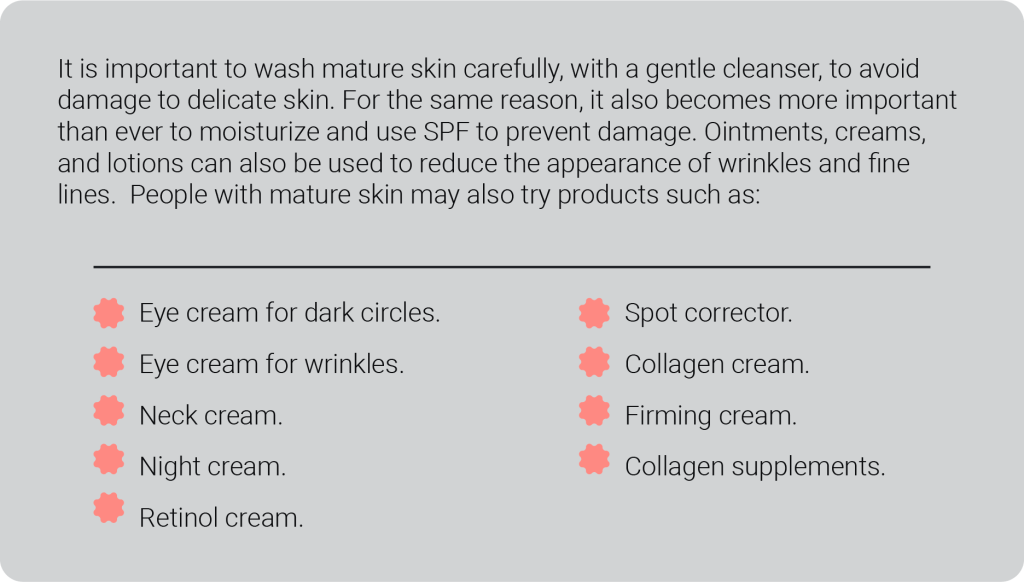
Chapter 4
Daily Cleansing and Hydration
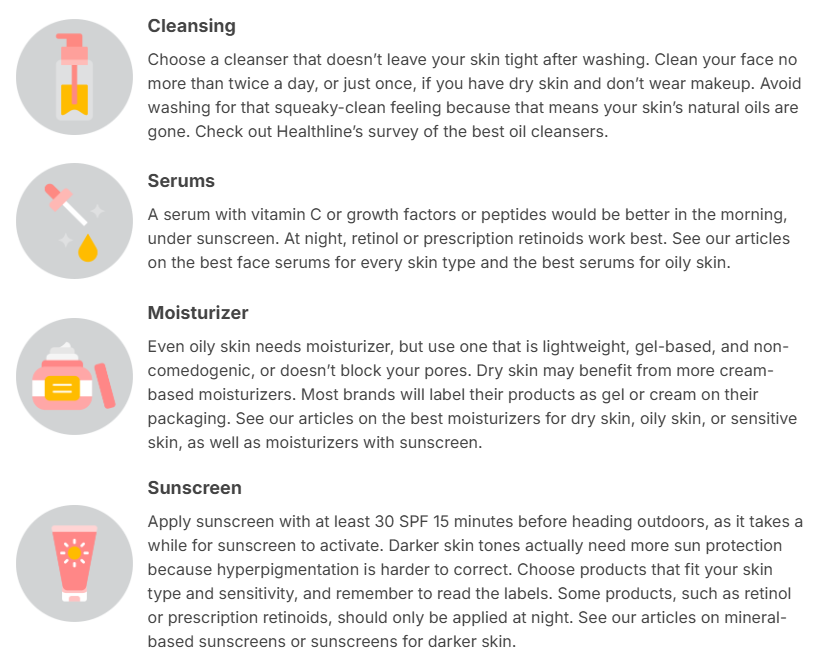
A daily skin care routine has four basic steps you can do once in the morning and once before you sleep.
Prioritizing detoxification is pivotal for maintaining a healthy gut. We can achieve better digestive health, improved nutrient absorption, and a stronger immune system by supporting the body's natural cleansing processes.
Skin type guide
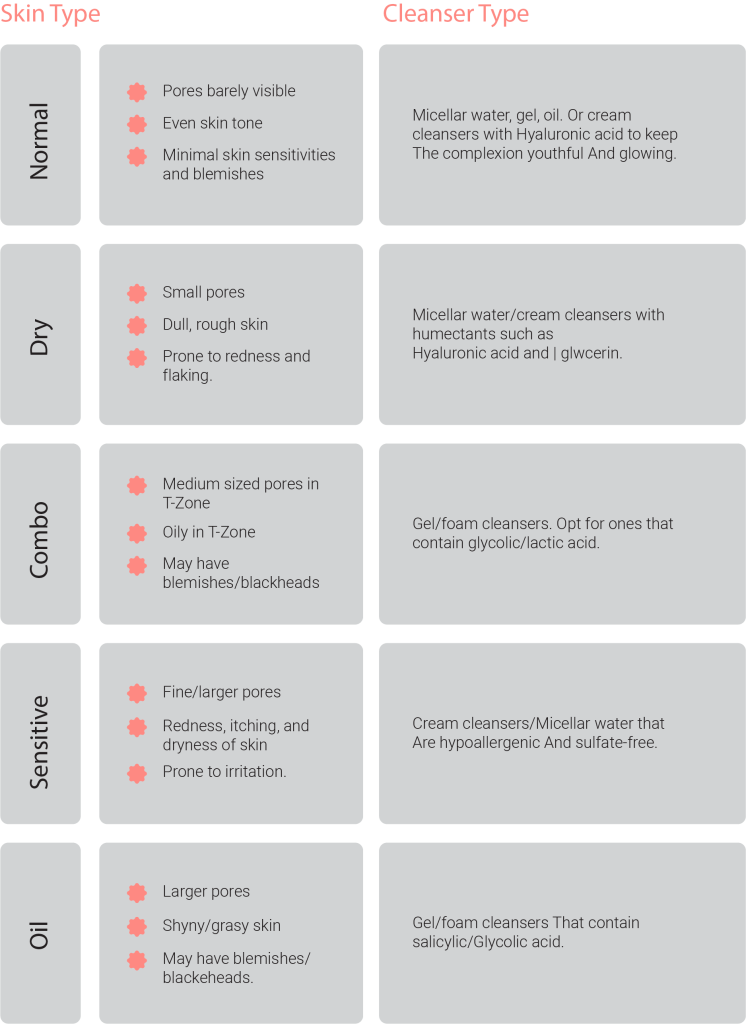
Source: WebMD and Paulaschoice.com
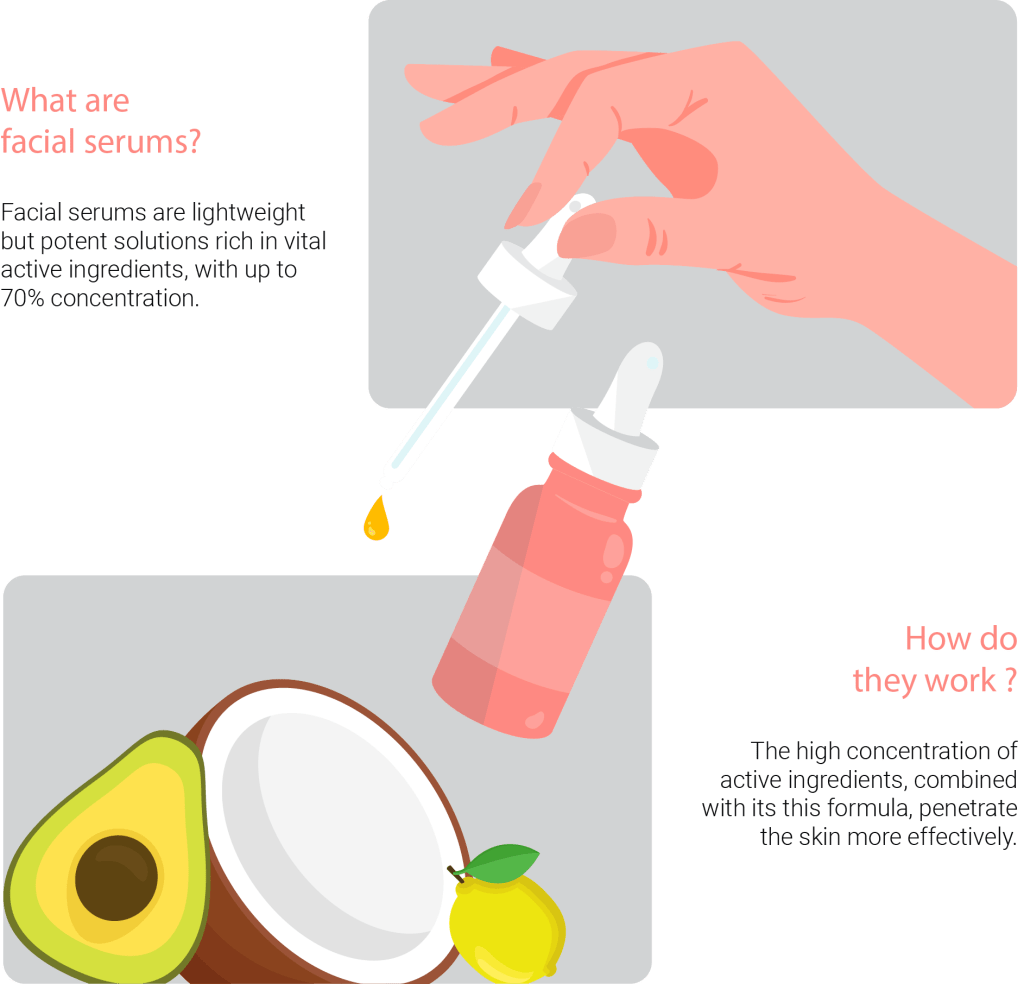
The ultimate guide to facial serums
What it is & how to use it
Serum VS Moisturizer
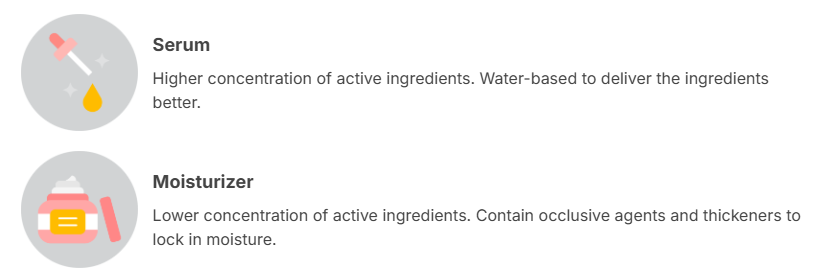
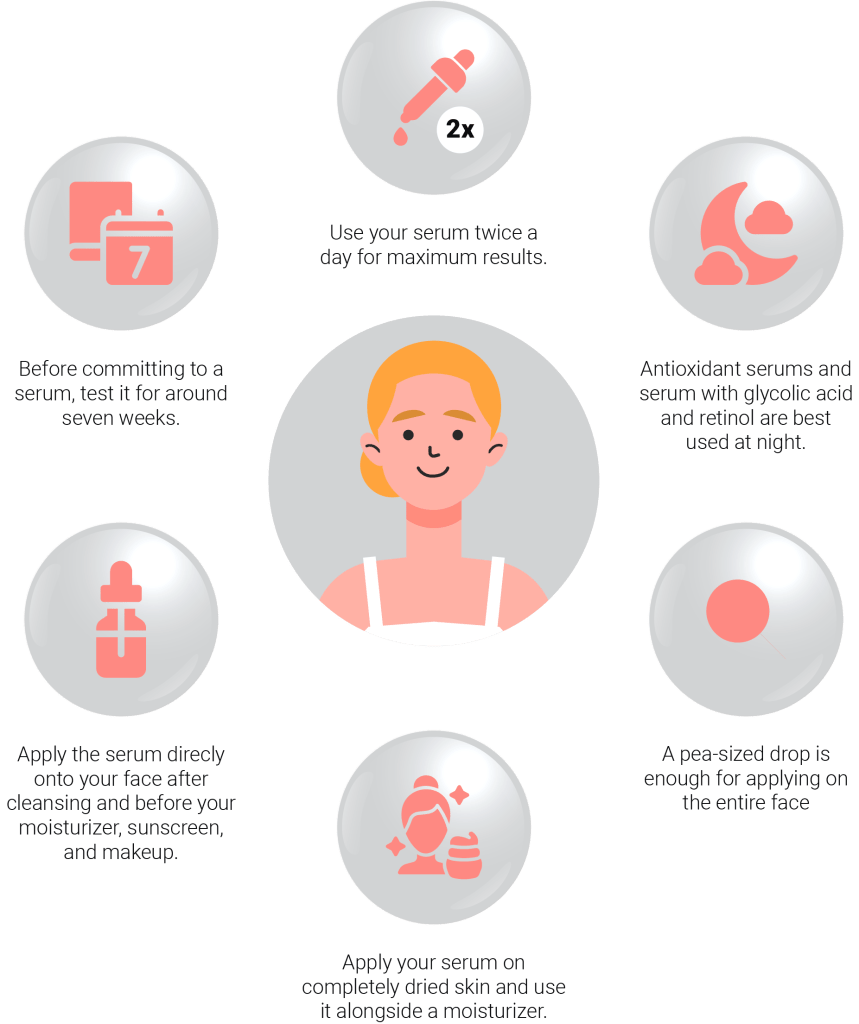
For better results, use your serum before applying moisturizer to help boost the skin's moisture absorption.
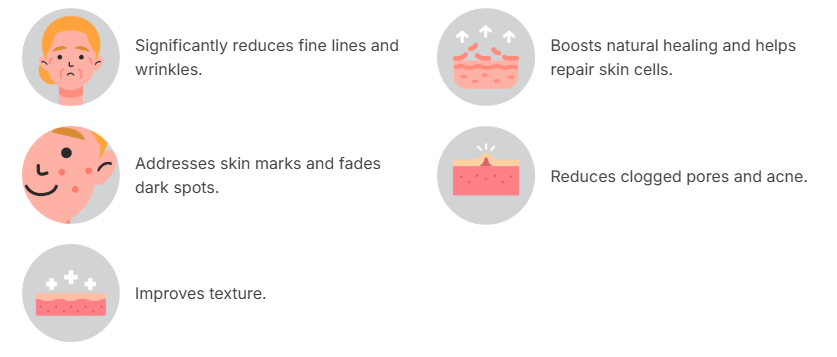
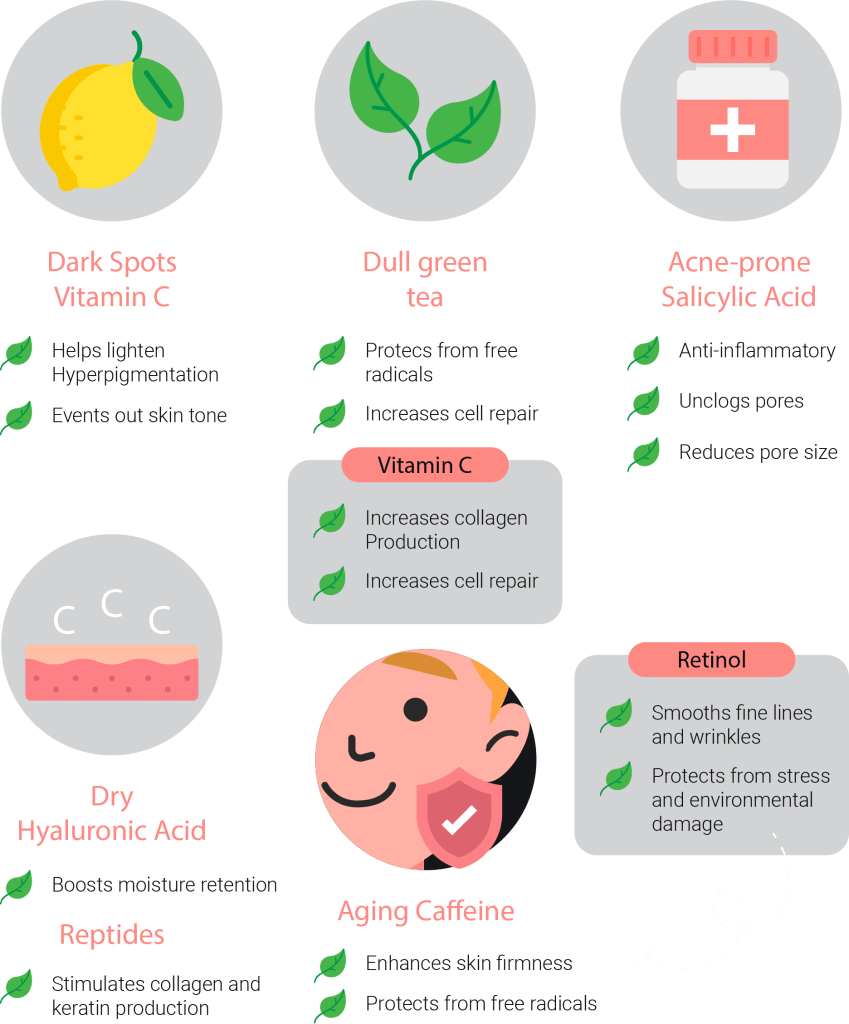
How do your pick the right serum?
Serums contain certain active ingredients to address specific skin issues. You should pick a serum that matches your skin type and concerns.
Benefits of Moisturizer
Moisturizer is an important part of a skincare routine and helps promote healthy skin. Benefits of adding moisturizer to your regimen include:
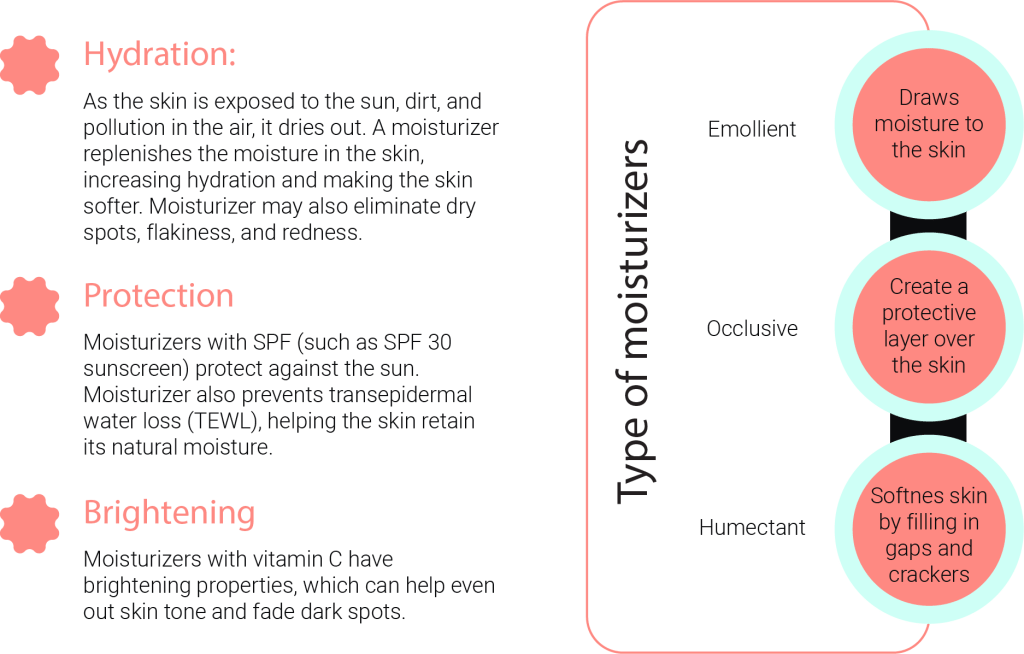
Types of Moisturizer
Moisturizers aren't just about hydration—they're tailored to your skin's needs, and most products blend ingredients from three key categories to deliver full-spectrum benefits.
According to U.S. data, over 25 million Americans use moisturizers regularly to maintain skin health. Dermatologists consistently recommend choosing products based on your skin type—whether it's dry, oily, sensitive, or combination.
Emollients
Emollients like ceramides, shea butter, and cocoa butter smooth and soften the skin by filling in tiny cracks. They're especially helpful for dry or eczema-prone skin.
Ceramides, for example, make up about 50% of the skin's natural barrier and help retain moisture. Collagen-based emollients are often used for their anti-aging properties, helping reduce the appearance of fine lines and wrinkles¹³.
Humectants
Humectants such as glycerin, hyaluronic acid, and urea act like moisture magnets. They draw water from the air and deeper layers of the skin to hydrate the surface.
Glycerin is one of the most widely used humectants and continues to hydrate even after absorption. Research shows that topical application of humectants can increase skin hydration by up to 70%, significantly improving barrier function and reducing dryness, particularly in environments with low humidity¹⁴.
Occlusives
Occlusives like petrolatum, beeswax, and dimethicone form a protective layer on the skin to prevent moisture loss. Petrolatum is one of the most effective occlusives, reducing trans epidermal water loss by up to 99%.
These ingredients are especially useful for very dry or cracked skin, helping seal in moisture and protect against environmental stressors¹⁵.
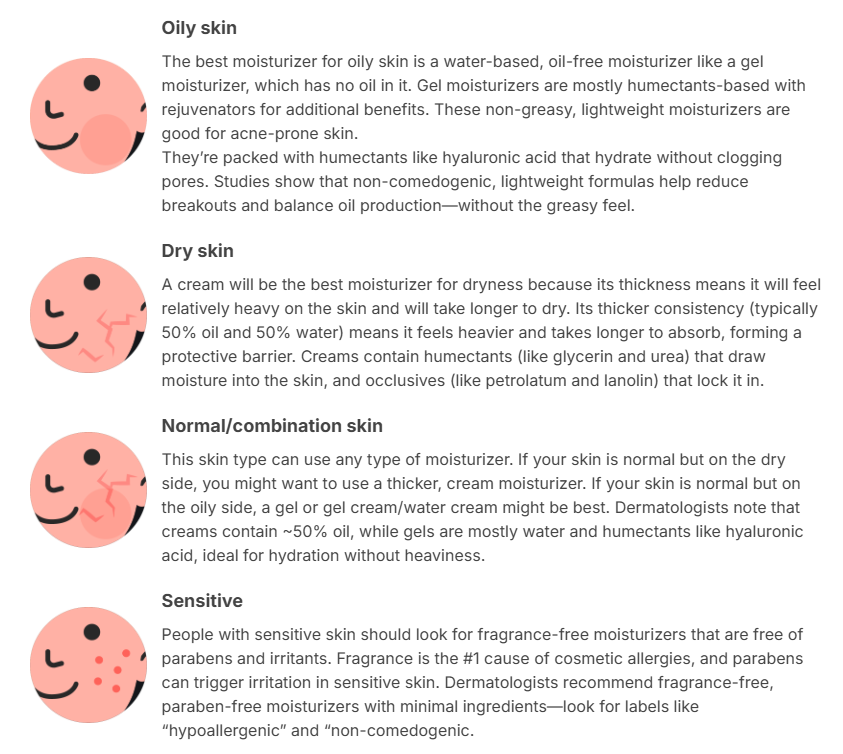
How to Choose Moisturizers for Different Skin Types
Different skin types¹⁶¹⁷ need different facial moisturizers, which come in different textures and thicknesses. Consult a dermatologist to help you find your best face moisturizer.
Chapter 5
Protecting Your Skin from UV Rays
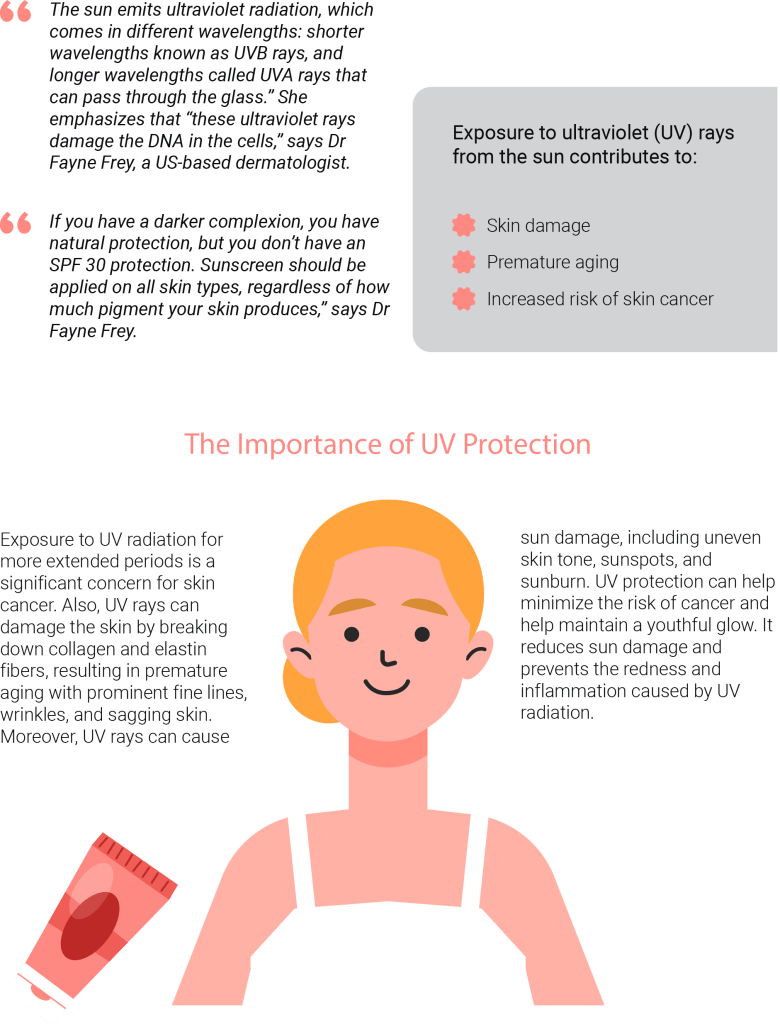
Your Shield Against Skin Damage
How to Protect Your Skin from UV Rays
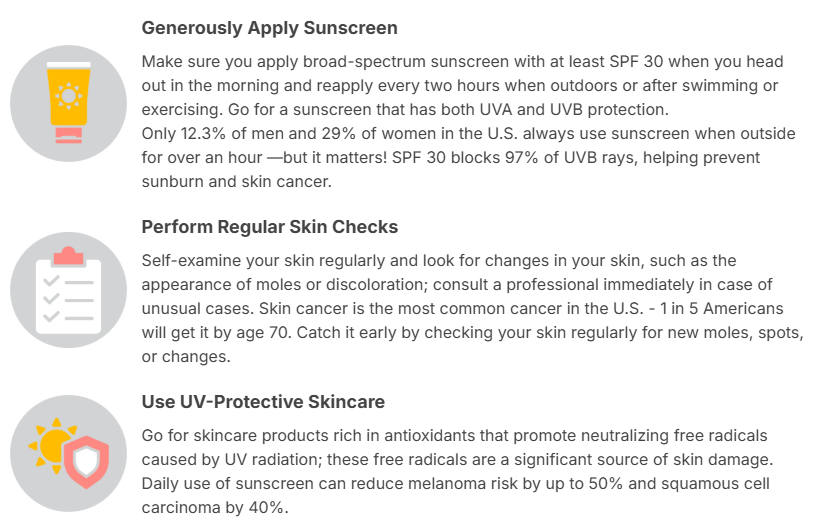
Following are some of the ways that can help protect your skin from UV Rays¹⁸¹⁹²⁰:
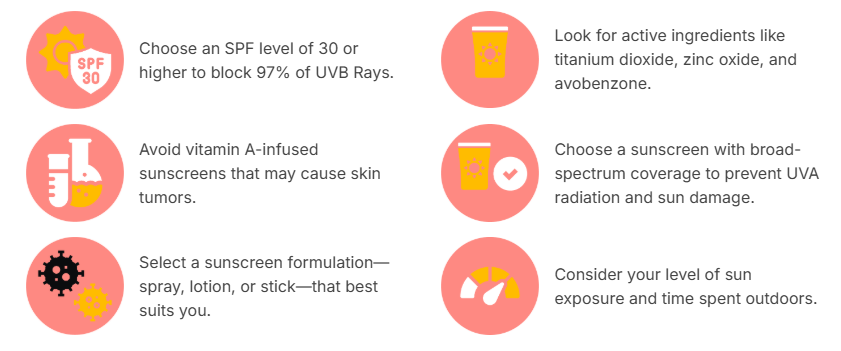
Tips to choose the right Sunscreen
Source: stylecraze.com
SPF Selection Chart
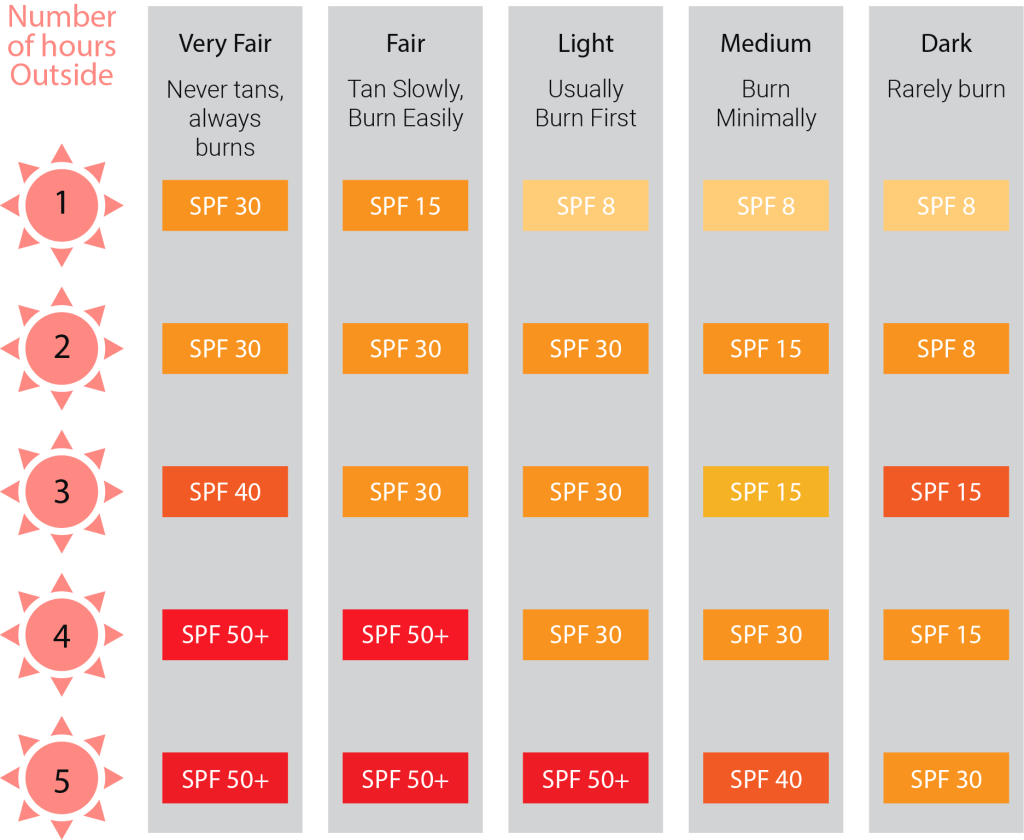
Source: SSMHealth
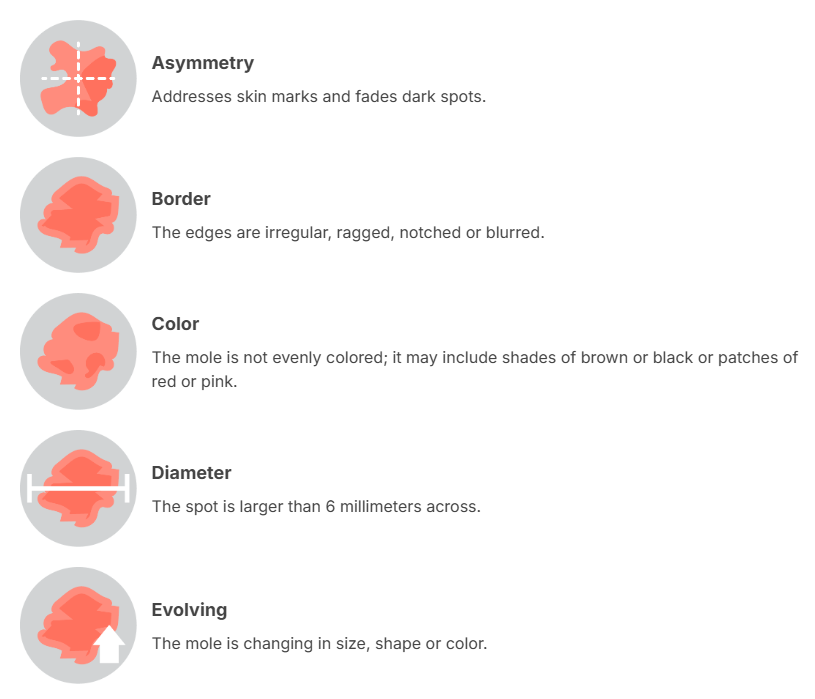
A B C D E of Checking for Melanoma
UV rays are bad for your skin; you must experience some damage each time you leave the house without applying any sunscreen. It is not that you buy a sun block-cream once and stay safe against the UV rays all year round.
Melanoma can also be as a result of excessive UV Rays. Skin cancer that is known as melanoma is capable of spreading to other parts of the body. You should also practice on how to check warning signs of melanoma.
Chapter 7
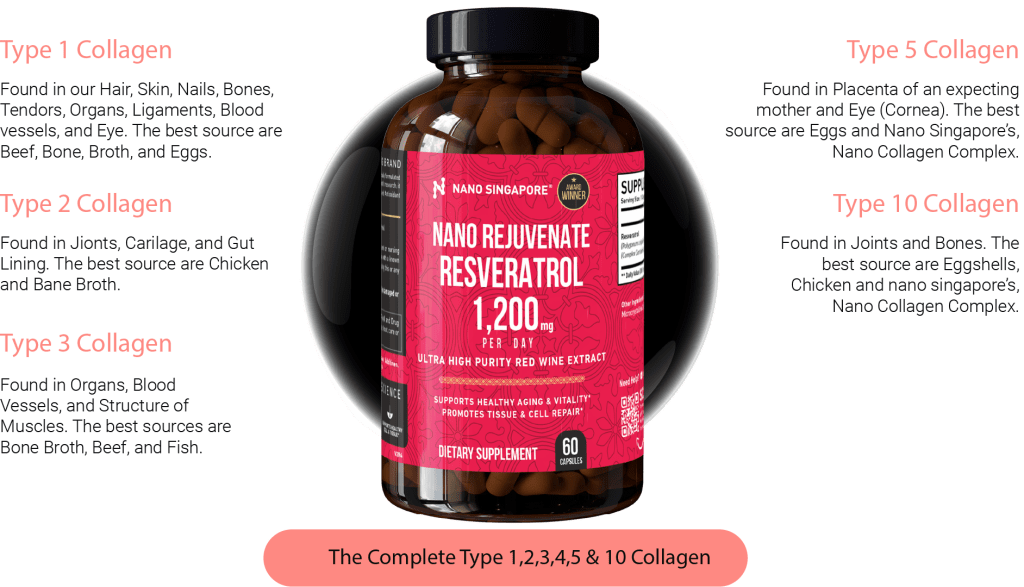
Don't Forget Supplements
No matter how hard you try to include all the healthy, green, and good things in your diet, you can only cover some of your body's requirements. This is where supplements provide the body with all the nutrients and minerals it requires.
While you consume many vitamins from a healthy diet plan, you may still require some nutrients the food does not fulfill.
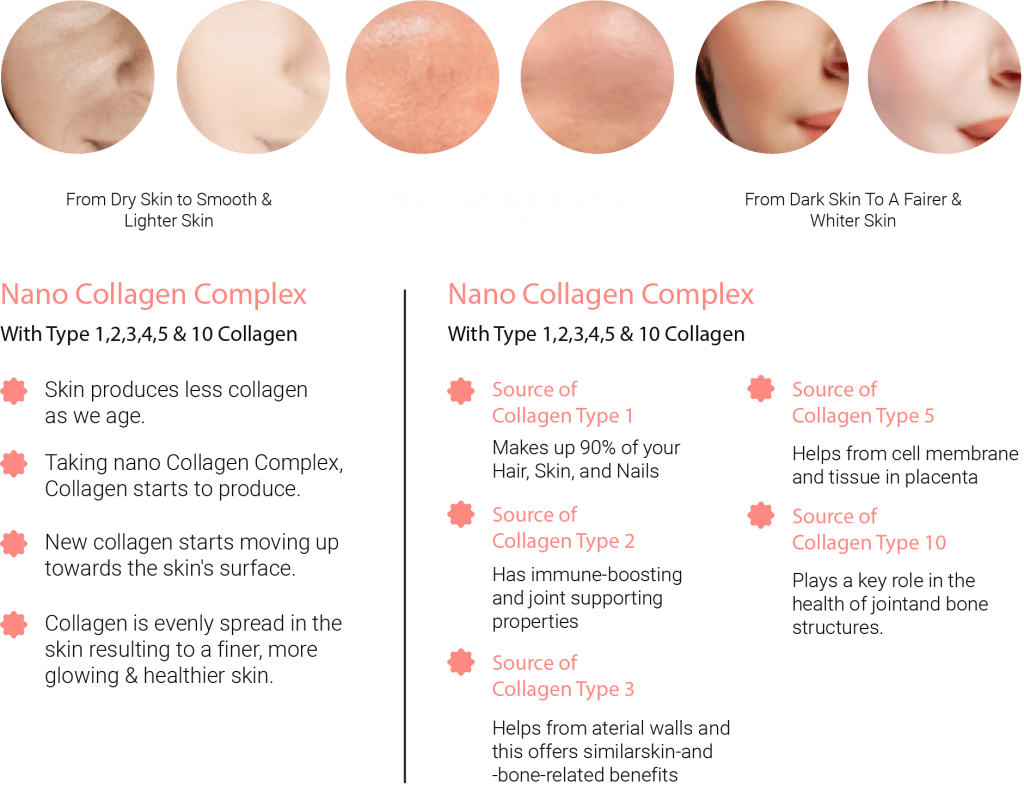
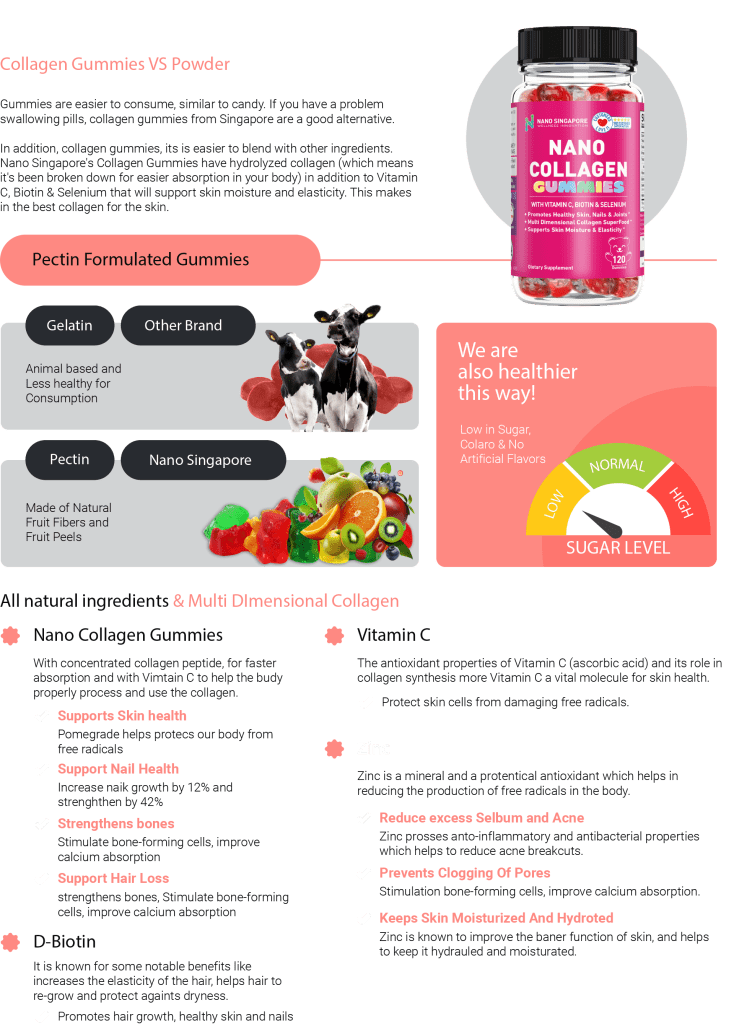
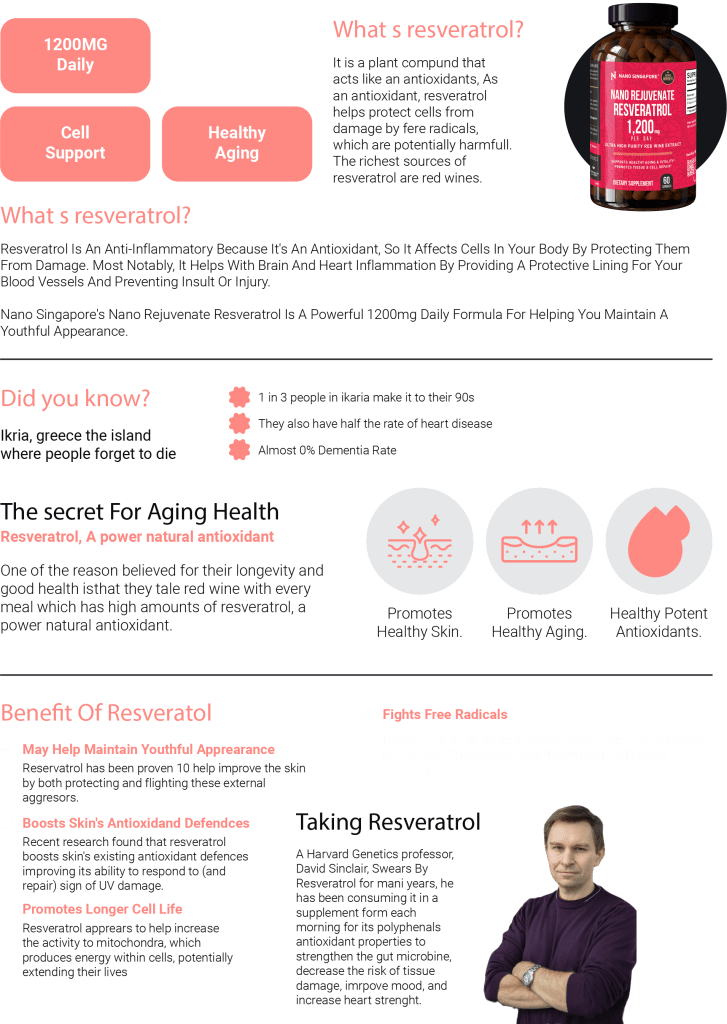
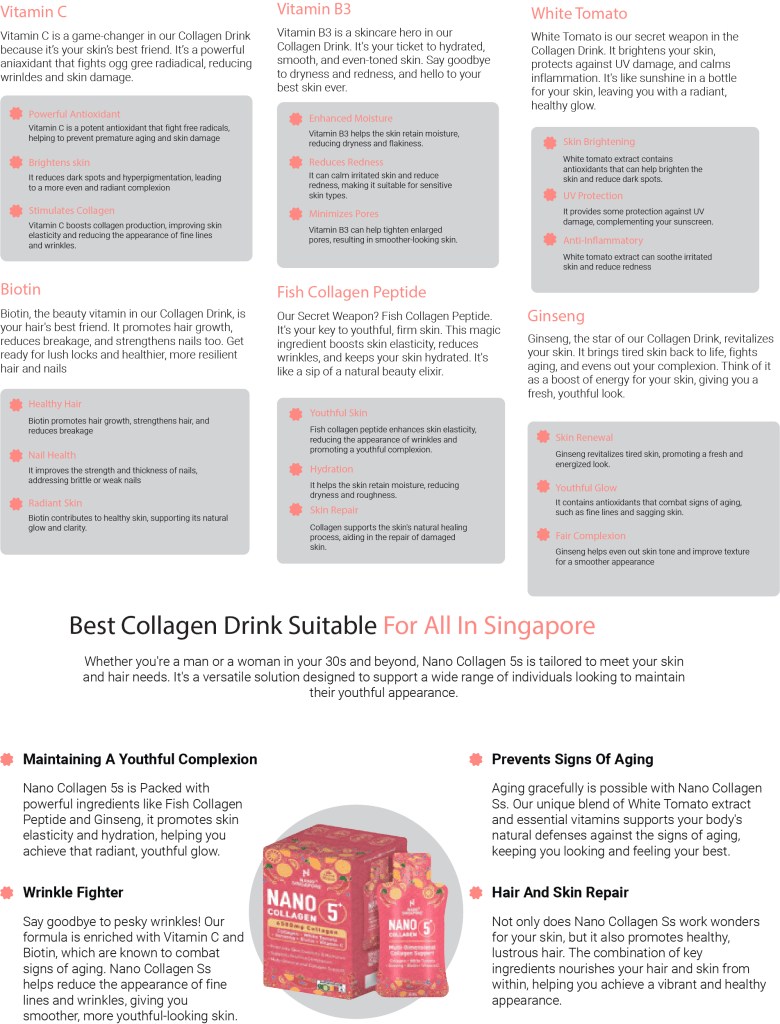
Worry not; we have an award-winning propriety formula at your disposal that would support healthy skin and hydration.
Award-Winning Proprietary Formula
Active formula designed to support skin health, vitality, moisturization and elasticity.
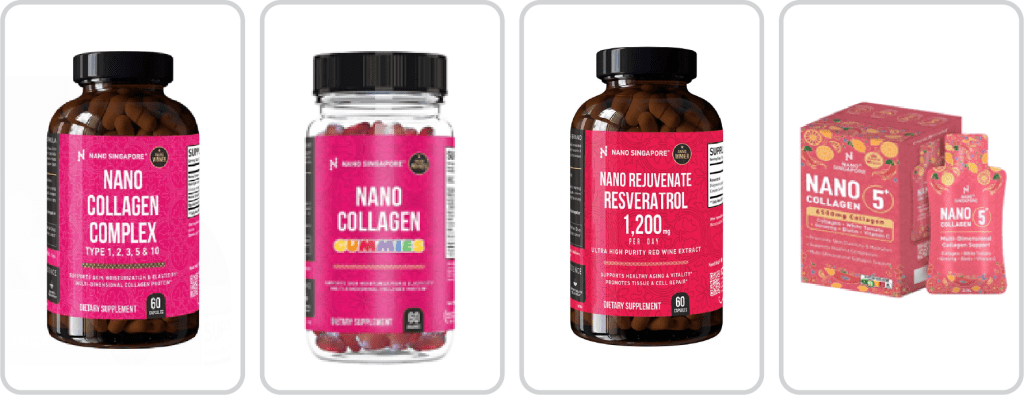
By supplementing with Nano Singapore's advance formulated product, you'll be feeling your best every day.
Chapter 8
A Final Word
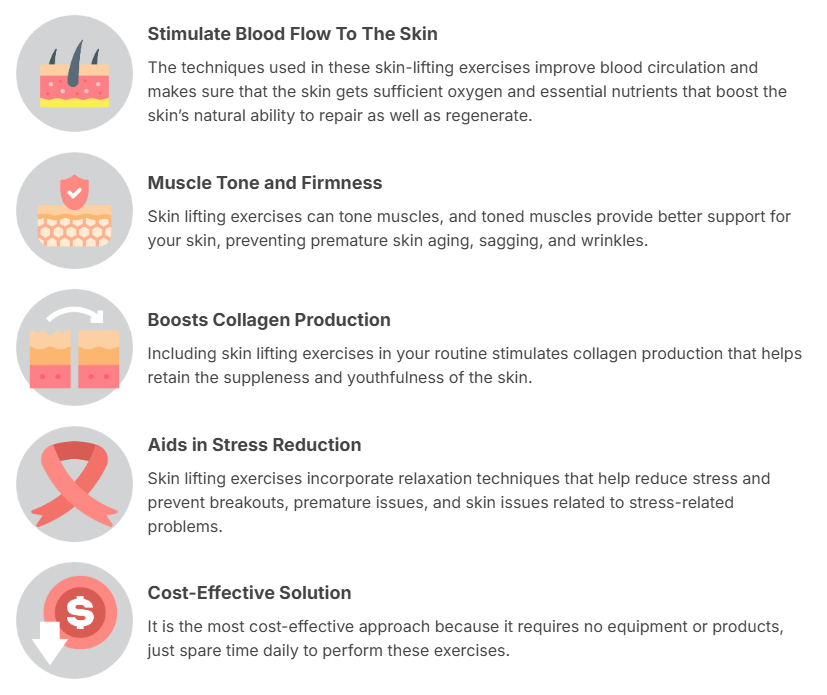
Routines and exercises on skin lifting are important towards a healthy and vibrant skin. The exercises are quite useful and enhance the blood circulation and muscle tone due to production of collagen and relieving stress. Like any other part of the body, regular exercise is healthy, and so these exercises that form part of the skincare exercises will result to the shine of the skin.
What is more, it is essential to do these exercises carefully not to cause any pain and discomfort. Duration and repetition are advised to be used with moderation so that they start at low limit and gradually build up to get used to the routine. No two persons have the same skin and the result can be different.
Nevertheless, when performing these skin lifting exercises, in an event that there is some discomfort that could be experienced, one should consider consulting a skincare expert. In addition, when working out you should pay attention to diet. To achieve that velvet plump skin then you better include nutrient rich food in your diet.
Also, you need to make sure that your skin is appropriately moisturized during the day. Finally, the most important factor is your skin care against the UV damaging sun rays which is a goal during the sun-down months.
Remember to use sunblock when the sun is cloudy as well. When you incorporate some of these protective measures in your daily routine you are able to spend some of your time outdoors with a healthy youthful skin.
References
- Precedence Research, 2023. Skincare Market (By Product: Creams, Lotions, Powders, Sprays; By Distribution Channel; By Region) - Global Industry Analysis, Size, Share, Growth, Trends, Regional Outlook, and Forecast 2023–2032.
- Yamauchi, P.S., 2017. Facial exercise and facial rejuvenation: a review. Dermatologic Surgery, 43(8), pp.1047–1051.
- Knaggs, H. and Lephart, E.D., 2023. Enhancing skin anti-aging through healthy lifestyle factors. Cosmetics, 10(5), p.142.
- Okamoto, R., Manabe, T. & Mizukami, K., 2021. Effects of facial muscles exercise on mental health: A systematic review. International Journal of Environmental Research and Public Health, 18(22), p.12216.
- Pullar, J.M., Carr, A.C. and Vissers, M.C.M., 2017. The Roles of Vitamin C in Skin Health. Nutrients, 9(8), p.866.
- Ziboh, V.A., Miller, C.C. and Cho, Y., 2000. Metabolism of polyunsaturated fatty acids by skin epidermal enzymes: generation of anti-inflammatory and antiproliferative metabolites. American Journal of Clinical Nutrition, 71(1 Suppl), pp.361S–366S.
- Thiele, J.J., Hsieh, S.N. and Ekanayake-Mudiyanselage, S., 2005. Vitamin E: critical review of its current use in cosmetic and clinical dermatology. Dermatologic Surgery, 31(7 Pt 2), pp.805–813.
- Proksch, E., Schunck, M. and Zague, V., 2014. Oral intake of specific bioactive collagen peptides reduces skin wrinkles and increases dermal matrix synthesis. Skin Pharmacology and Physiology, 27(3), pp.113–119.
- Smith, R.N., Mann, N.J., Braue, A., Mäkeläinen, H. and Varigos, G.A., 2007. A low-glycemic-load diet improves symptoms in acne vulgaris patients: a randomized controlled trial. American Journal of Clinical Nutrition, 86(1), pp.107–115.
- Palma, L., Marques, L.T., Bujan, J. and Rodrigues, L.M., 2015. Dietary water affects human skin hydration and biomechanics. Clinical, Cosmetic and Investigational Dermatology, 8, pp.413–421.
- Sharma, N., Chaudhary, S.M., Khungar, N., Aulakh, S.K., Idris, H., Singh, A., Sharma, K., Chaudhary, S. & Kaur Aulakh, S., 2024. Dietary influences on skin health in common dermatological disorders. Cureus, 16(2).
- Smith, R.N., Mann, N.J., Braue, A., Mäkeläinen, H. and Varigos, G.A., 2007. A low-glycemic-load diet improves symptoms in acne vulgaris patients: a randomized controlled trial. American Journal of Clinical Nutrition, 86(1), pp.107–115.
- Li, Q., Fang, H., Dang, E. and Wang, G., 2020. The role of ceramides in skin homeostasis and inflammatory skin diseases. Journal of Dermatological Science, 97(1), pp.2–8.
- Loden, M., 2003. The clinical benefit of moisturizers. Journal of the European Academy of Dermatology and Venereology, 17(6), pp.646–653.
- Rawlings, A.V., 2006. The role of occlusive agents in skin barrier repair. Journal of Dermatological Treatment, 17(sup1), pp.20–24.
- Loden, M., 2003. The clinical benefit of moisturizers. Journal of the European Academy of Dermatology and Venereology, 17(6), pp.646–653.
- Draelos, Z.D., 2018. The effect of moisturizer type on skin hydration and barrier function in oily and combination skin. Journal of Cosmetic Dermatology, 17(5), pp.747–752.
- American Cancer Society, 2023. Skin Cancer Prevention and Early Detection.
- American Cancer Society, 2023. Skin Cancer Facts & Figures.
- Green, A.C., Williams, G.M., Logan, V. and Strutton, G.M., 2011. Reduced melanoma after regular sunscreen use: randomized trial follow-up. Journal of Clinical Oncology, 29(3), pp.257–263.