Key Takeaways
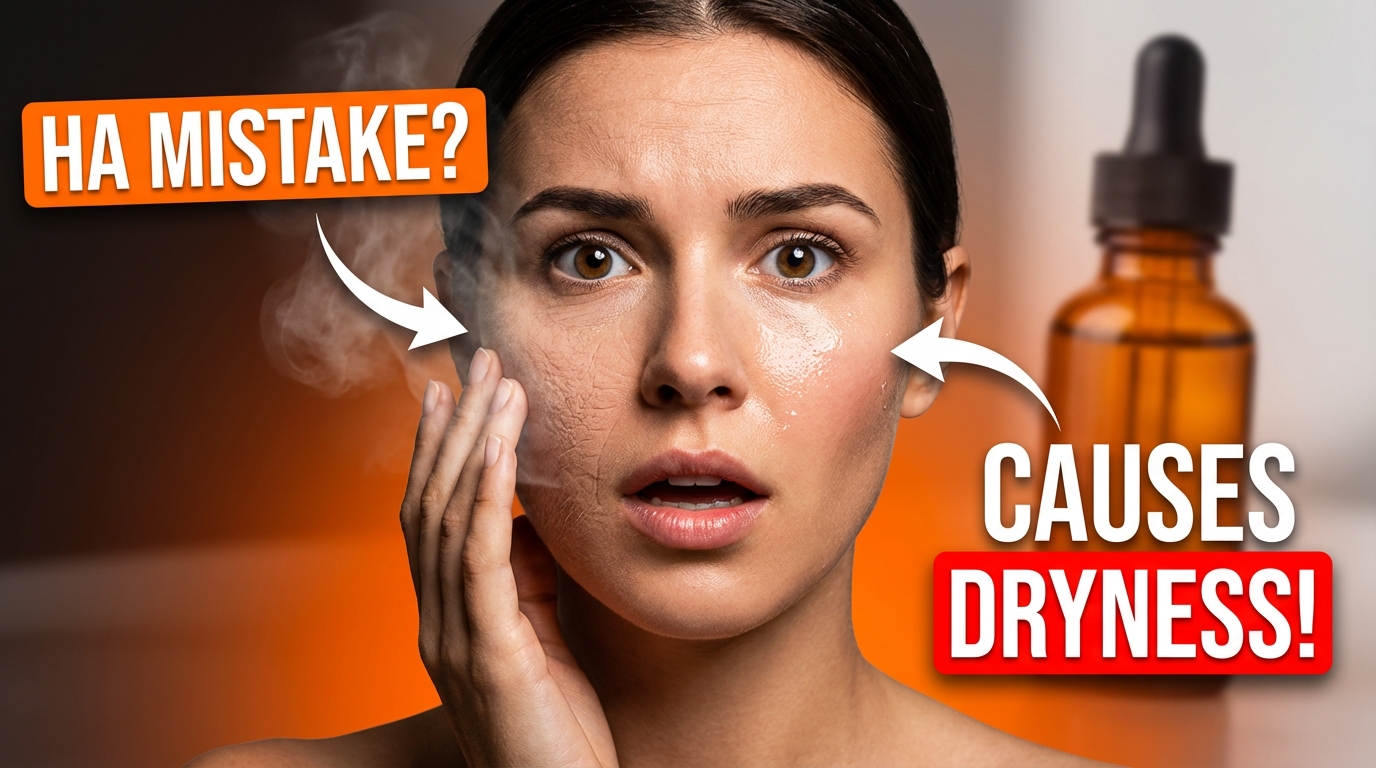
- Hyaluronic acid (HA) works best when you apply it to slightly damp skin and seal it quickly with a moisturiser—otherwise it can feel tight or “drying,” especially in air-conditioned environments.
- Dehydrated skin is about water loss, not oil—so you can be oily and dehydrated. In Singapore, the hot-outdoor / cold-aircon swing makes this extra common.
- If HA stings or seems to “not work,” don’t keep piling on more actives. Do a 7-day barrier reset: gentle cleansing, HA-on-damp, a barrier-friendly moisturiser, and daily sunscreen.
Introduction
If you’ve ever stepped out of the MRT feeling sticky from the humidity… only to sit down in an air-conditioned office and suddenly feel your face go tight and papery—yeah, you’re not imagining it. That “tight-but-not-exactly-dry” feeling is often dehydrated skin(water loss), not necessarily dry skin(oil deficiency). And it’s exactly why hyaluronic acid is so popular: it’s a water-binding ingredient that can make skin feel bouncier and more comfortable. But here’s the frustrating part: some people start a hyaluronic acid serum routine and feel… tighter. Or they notice flaking. Or makeup starts clinging to weird patches. Then the internet chimes in with, “HA pulls water out of your skin!” and suddenly you’re scared to use the one ingredient you bought to fix the issue. So let’s clear this up in a practical, evidence-based way—Singapore climate included. We’ll talk about why HA can feel drying in real life, how to layer it properly (without overcomplicating your routine), and what to do if your barrier is already irritated. ---
What “dehydrated skin” means (and why it’s common in Singapore)
Dehydrated vs dry skin: water vs oil (why you can be oily yet dehydrated)
A quick mental model that saves a lot of confusion:
- Dry skin = lacks oil/lipids. It often feels rough, looks flaky, and tends to love richer textures.
- Dehydrated skin = lacks water. It can look dull, feel tight, sting easily, and show fine “crinkly” lines—even if you’re oily.
Dehydration is closely linked to how well your skin barrier slows transepidermal water loss (TEWL)—the normal process of water escaping from the skin into the air. Your barrier’s job is to keep that water in while also keeping irritants out. When the barrier is stressed, TEWL rises and skin gets that uncomfortable “tight” sensation more easily. (DermNet has a good plain-English overview of barrier function and TEWL.)
Singapore triggers: outdoor heat/humidity, indoor air-conditioning, frequent cleansing after sweating
Singapore is basically the perfect setting for dehydration confusion because the environment changes fast:
- Outdoors: sweaty, humid, hot. You might cleanse more often because you feel grimy.
- Indoors: air-conditioning can be drying, and that shift can increase how quickly water evaporates off the skin surface.
- Lifestyle reality: many of us do a long commute, work under air-con, then pop out for lunch in the heat, then back into air-con again.
Even if the ambient outdoor humidity is high, your microclimate matters. Air blowing across skin (fan + air-con + walking fast) can speed evaporation. That’s one reason your face can feel dehydrated in a country that’s famously humid.
Signs you’re dehydrated (common but easy to miss)
A lot of people only think “dehydration” means flaking. But dehydrated skin often shows up as:
- Tightness after cleansing (especially if you feel “squeaky clean”)
- Dullness even when you’re producing oil
- Makeup caking or separating around the mouth/cheeks
- Fine, shallow “crinkly” lines that look worse by afternoon
- Stinging when you apply products that used to feel fine
If you’re nodding along, the goal isn’t to throw 10 hydrating products at your face. It’s to build a barrier-friendly routine that keeps water in consistently—especially on air-con heavy days. ---
Hyaluronic acid (HA) 101: what it is and what it can (and can’t) do
HA is naturally present in skin and binds water (the water-holding role)
Hyaluronic acid is a naturally occurring molecule found throughout the body, including skin and connective tissue. It’s known for its ability to attract and bind water, contributing to tissue hydration and “bounce.” In basic terms, it behaves like a moisture magnet in the extracellular matrix. That’s the science reason HA shows up everywhere from injectables to wound dressings to moisturisers.
Why topical HA can improve hydration: what the evidence suggests
Topical HA isn’t just hype—it’s been studied in different formulations, and overall, the evidence supports that well-formulated HA products can improve measurable hydration and skin feel. A practical nuance: studies vary a lot by formulation(molecular weights, supporting ingredients, delivery system, and what else is in the routine). So instead of obsessing over “what % is best,” it’s often more helpful to focus on application method and how you support the barrier around it.
Common myth: “HA pulls water out of your skin”—when this can feel true in practice
You’ll often hear: “Never use HA in dry climates; it will suck moisture out of your skin.” Here’s the more accurate version:
- HA is a humectant—it binds water.
- If there’s water on your skin (from cleansing, a light mist, or just damp hands), HA can help hold onto that water near the surface.
- If you apply HA and then don’t seal it, water can still evaporate—especially if you’re in air-con or sitting under a fan.
So HA isn’t “stealing” water like a villain. But if you use it in a way that increases water at the surface without reducing evaporation, it can feel like you’re drier later. What you’re experiencing is often water leaving the skin surface because the routine didn’t include a good “lid.” That “lid” is typically your moisturiser—especially one with some occlusive or silicone-based ingredients that slow TEWL.
Different labels you’ll see: sodium hyaluronate, hydrolyzed HA, crosspolymer (what matters most)
If you’ve looked at ingredient lists, you’ve probably seen variations like:
- Hyaluronic Acid
- Sodium Hyaluronate
- Hydrolyzed Sodium Hyaluronate
- Sodium Hyaluronate Crosspolymer
- Sodium Acetylated Hyaluronate
- Hydroxypropyltrimonium Hyaluronate
The takeaway isn’t that one name is automatically “the best.” It’s that brands use different forms to target different skin-feel, film-forming properties, and (sometimes) different behaviour on the skin surface. For example,
Nano Skinz Hyaluronic Acid Serum 30ml lists multiple HA forms in a “hydration & moisture” complex (including hydroxypropyltrimonium hyaluronate, sodium acetylated hyaluronate, hyaluronic acid, sodium hyaluronate crosspolymer, and hydrolyzed sodium hyaluronate), plus humectant support like sorbitol. It also includes saccharide isomerate, a humectant often used for longer-lasting hydration feel. That kind of multi-humectant approach can feel more comfortable than HA alone—as long as you still seal it. One important note (because this matters for sensitive folks): that same formula also lists retinol under “brightening & antioxidants.” If you’re already using a separate retinoid, or your barrier is currently irritated, treat this as a signal to go slow and pay attention to stinging. ---
The evidence-based hyaluronic acid serum routine: layer it the “Damp + Seal” way
Let’s make this simple and repeatable—because the best routine is the one you’ll actually do on a weekday morning.
Core rule #1: Apply HA to damp (not dripping) skin
HA performs best (and feels best) when there’s a bit of water available.
What “damp” means in real life:
- After cleansing, lightly pat so your face isn’t dripping.
- Or wet your hands, then press water onto your cheeks/forehead.
- Your skin should feel cool and slightly moist, not soaking.
If you’re in a rush, this can be a 5-second step. But it makes a huge difference in comfort.
Core rule #2: Seal within 1–2 minutes with moisturiser (pick your occlusive/emollient)
Moisturisers generally work through some combo of:
- Humectants (bind water)
- Emollients (smooth and soften)
- Occlusives (reduce water loss by forming a barrier)
That’s why HA (a humectant) usually feels better when paired with a moisturiser that adds emollients and/or occlusives on top. If you wait too long after your serum, your face can dry down and you’re more likely to get that “tight film” feeling.
How much HA to use (more isn’t better)
A common dehydration trap is over-layering. Try:
- 1 pump (or a pea-sized amount) for the whole face
- 2 pumps if you’re doing face + neck and you’re not using other serums
If you apply a thick layer, it can:
- Pill under sunscreen
- Dry down tacky
- Tempt you to keep rubbing (which can irritate)
AM routine (Singapore edition): cleanse → HA → moisturiser → sunscreen
A commuter-friendly morning routine that doesn’t require 12 steps: 1.
Gentle cleanse(or just rinse if you’re not oily in the morning) 2.
HA on damp skin
3.
Moisturiser(choose texture based on whether you’ll be in air-con all day) 4.
Sunscreen(daily, yes—even when it’s cloudy) If you’re using
Nano Skinz Hyaluronic Acid Serum 30ml, treat it like your hydration serum step. Because it contains multiple humectants and HA forms, you usually don’t need an additional hydrating toner and mist and essence. Keep it minimal, then seal.
Pilling tip: let moisturiser sit 30–60 seconds before sunscreen. Thin layers beat thick layers.
PM routine: cleanse → HA → moisturiser (actives only after your barrier is calm)
At night, the biggest win for dehydrated skin is consistency, not intensity: 1.
Cleanse gently(especially if you wear sunscreen/makeup) 2.
HA on damp skin
3.
Moisturiser(you can go slightly richer at night) If you love actives (retinoids, exfoliating acids, vitamin C), keep them off the table until your skin feels calm—no stinging, no cracking, minimal tightness.
A quick comparison to help you choose your “seal” (so HA doesn’t feel drying)
Different seals work better for different people, climates, and acne tolerance. Here’s a practical comparison you can screenshot mentally.
| Option | Key benefits | Best for | Notes |
|---|---|---|---|
| Option | Key benefits | Best for | Notes |
| HA serum + light gel-cream moisturiser | Hydrates without heaviness; lower chance of feeling greasy | Oily/acne-prone skin; hot outdoor days | Look for glycerin + lightweight silicones (e.g., dimethicone) to reduce TEWL without a heavy feel |
| HA serum + cream moisturiser | Better comfort in air-con; smoother makeup application | Normal/combination; office air-con exposure | A balanced cream often combines humectants + emollients + mild occlusives (great “daily driver”) |
| HA serum + ointment spot-seal (only on flaky patches) | Strongest reduction of water loss on compromised spots | Very dry, flaky areas; barrier repair weeks | Not an all-over step for everyone—use like a targeted “bandage,” especially around mouth/nose |
| Multi-HA serum (e.g., Nano Skinz Hyaluronic Acid Serum) + moisturiser | Multiple HA forms + supporting humectants can improve hydration feel | People who want one main hydration serum | Still needs a moisturiser on top; if your serum includes retinol, avoid stacking with other strong actives initially |
How to read this table: pick the seal based on where you spend your day (outdoors vs air-con) and what your skin tolerates (acne-prone vs very dry). The goal is comfortable skin that stays comfortable—not just a dewy look for 20 minutes.
Buyer guidance: how to read HA product labels (without getting scammed by jargon)
A few label-reading tips that genuinely help:
- Ingredients are listed in descending order (generally). If HA is near the very end, it may be there at a tiny amount—still potentially useful, but don’t expect miracles.
- Multiple humectants beat one humectant for many people. HA + glycerin + saccharide isomerate + panthenol tends to feel “rounder” than HA alone.
- Fragrance and lots of “extra actives” increase the odds of irritation when your barrier is compromised.
- Molecular weight claims can be helpful, but they’re hard to verify as a consumer. Focus on how your skin feels over 2–4 weeks with consistent use.
If a product stings, don’t assume HA is the problem. It may be fragrance, alcohol, too many actives, or simply a barrier that needs a reset. For readers who like browsing options, Nano Singapore’s skin catalogue includes both topical and ingestible “skin health” products—just keep your routine logic the same: hydrate + seal topically, and don’t overload your skin when it’s already irritated. If you want to see the exact serum mentioned above, it’s here:
Nano Skinz Hyaluronic Acid Serum 30ml. ---
Troubleshooting: a 7-day reset plan, common mistakes, and barrier-supportive habits (Singapore lifestyle)
A simple 7-day reset plan if HA is stinging or “not working”
If your HA serum is causing stinging or that weird tight “shrink wrap” feeling, treat it as a sign your routine needs fewer variables.
Days 1–3: calm the skin
- Stop strong actives (acids, retinoids, harsh acne treatments)
- Use a gentle cleanser (no scrubby tools, no “squeaky clean” finish)
- Apply HA on damp skin
- Seal with a barrier-friendly moisturiser (cream if you’re in air-con a lot)
Days 4–7: adjust your seal
- If you still feel tight by midday, your moisturiser may be too light for your environment.
- If you’re greasy but tight, don’t automatically strip more—try a lighter gel-cream in the morning and a cream at night.
- If you have flaky patches, add spot-sealing (a tiny amount of ointment) just on those areas.
Reintroducing actives
- Add one active at a time, 1–2 nights a week at first.
- Keep HA + moisturiser as your “base routine,” and let the active be the add-on—not the backbone.
When to skip HA temporarily
- Broken, raw, or actively inflamed skin
- Oozing or infected patches
- Dermatitis flares where everything burns (you may need medical treatment)
Common mistakes (and what to do instead)
Mistake: applying HA on totally dry skin
Fix: damp hands, quick press of water, then HA.
Mistake: using HA as the last step
Fix: HA is not a “topcoat.” Finish with moisturiser.
Mistake: chasing dehydration with more exfoliation
Fix: exfoliation can help texture, but too much can raise irritation and TEWL. If you’re tight and stingy, go barrier-first.
Mistake: layering too many actives at once
Fix: if your serum already contains an active (for example, a formula that includes retinol), be cautious about stacking with a separate retinoid or frequent acids.
Mistake: relying on matte, alcohol-heavy products all day
Fix: choose a sunscreen and base products that don’t leave your skin feeling squealed-clean by 3pm.
Barrier-supportive habits that make HA work better (real Singapore routine stuff)
Cleanse smart after sweat
If you sweat a lot, it’s tempting to cleanse aggressively. But dehydrated skin usually does better with:
- lukewarm water
- gentle cleanser
- short cleanse time
- no harsh towels (pat, don’t rub)
Office survival (air-con edition)
- Keep a small moisturiser at your desk.
- If you need to reapply, do it gently: press a pea-sized amount onto cheeks and around the mouth rather than rubbing your whole face.
- Try not to wash your face multiple times a day unless you truly need to.
Shower tips
Mayo Clinic dermatologists often talk about moisturising right after bathing—while skin is still hydrated—because that’s when sealing in water works best. If you like a simple rule: finish your shower, pat to damp, moisturise quickly.
Optional add-ons
- A humidifier at night can help some people, especially if you sleep in strong air-con.
- Facial mists are fine, but only if you seal afterward. Otherwise you’re just adding water that can evaporate.
A quick note on “inside-out” support (and how to shop intelligently)
Topicals do the heavy lifting for barrier comfort. But some people also like supporting skin from within—especially if dryness and dullness show up alongside stress, travel, or inconsistent meals. If you choose to buy supplements online, use the same skeptical, practical mindset you use for skincare labels:
- Check the form and dose (don’t just trust front-label marketing)
- Look for quality signals like GMP manufacturing, clear ingredient lists, and reasonable dosing
- Watch your allergens (e.g., fish collagen isn’t for everyone)
- Avoid mega-dosing multiple beauty supplements that overlap (biotin is a common repeat ingredient)
If you’re browsing, Nano Singapore groups many of its beauty-from-within options in one place (collagen, hair-skin-nails style formulas, antioxidants) here:
Skin Health collection. Treat supplements as optional support—not a replacement for a solid cleansing + moisturising + sunscreen routine.
Safety, patch testing, and when to see a doctor
HA is generally well tolerated, but it’s not magically irritation-proof. Any product can trigger irritation or allergic contact dermatitis—especially if your barrier is already angry.
Patch test basics
- Apply a small amount behind the ear or along the jawline for a few days.
- Look for delayed reactions: redness, itch, bumps, or burning.
Stop and seek medical advice if you notice
- persistent burning
- cracking with pain
- oozing or crusting
- widespread redness that doesn’t settle
- eczema-like flares
Also: if you’re on prescription acne meds, using a medical-grade retinoid, or you’ve had a recent in-clinic procedure (laser, peels), check with a clinician before experimenting. ---
Conclusion
Dehydrated skin is incredibly fixable—but it usually doesn’t need more products. It needs better sequencing. If you remember nothing else, remember this: apply HA to damp skin, then seal it. That one habit, paired with a gentle cleanser and a moisturiser that fits your air-con/outdoor reality, solves the “HA made me drier” problem for most people. And if your skin is stinging or flaring, simplify and give your barrier a week to settle before you reintroduce actives. If you’d like to explore options at your own pace, you can always buy supplements online for broader wellness support—but keep your skincare routine boring (in a good way) while your barrier gets comfortable again.
Frequently Asked Questions
FAQ 1
Can I use HA with vitamin C, niacinamide, or retinoids?
Usually yes, but irritation risk depends on the full routine. If you’re sensitive or already tight/stinging, stabilise first with HA + moisturiser for a week, then add one active back slowly. Also check whether your HA serum already contains actives (some formulas include retinol).
FAQ 2
How often should I use HA—once or twice daily?
Most people do well with once or twice daily. If you’re in air-con all day, twice daily can be comfortable—as long as you seal with moisturiser.
FAQ 3
Do I need a toner or facial mist with HA?
Not required. “Damp skin” can simply mean applying HA right after cleansing, or pressing a little water in with your hands. Mists are optional—just avoid misting repeatedly without moisturiser on top.
FAQ 4
Will HA clog pores?
HA itself is generally not considered pore-clogging. Breakouts usually come from the overall formula (heavy oils, certain occlusives for some people) or from irritation that triggers acne. If you’re acne-prone, choose lighter textures and keep layers thin.
FAQ 5
Is HA enough on its own in humid Singapore?
Often not. Even in humidity, your skin still loses water through TEWL, and air-con can create a drier microclimate. A moisturiser “seal” is what keeps hydration comfortable from morning to evening.
References
- https://www.ncbi.nlm.nih.gov/books/NBK482440/
- https://www.health.harvard.edu/healthy-aging-and-longevity/moisturizers-do-they-work
- https://dermnetnz.org/topics/skin-barrier-function
- https://newsnetwork.mayoclinic.org/n7-mcnn/7bcc9724adf7b803/uploads/2017/02/Mayo-Clinic-Minute-What-is-the-3-min.-moisturizing-window-script.pdf
- https://pmc.ncbi.nlm.nih.gov/articles/PMC10078143/
- https://nanosingaporeshop.com/products/best-hydration-serum

We at Nano Singapore Shop encourage you to consult a doctor before making any health or diet changes, especially any changes related to a specific diagnosis or condition.