
Key Takeaways
- MCTs (medium-chain triglycerides) take a “faster route” than most fats—many people notice they feel easier to use as fuel, but they’re still calories (and they’re not a stimulant).
- The most common downside is digestive upset (cramps, nausea, loose stools), which is usually dose-related and often improves with a “start low, go slow” plan.
- If you’re using MCT oil for weight management or fasting routines, it works best when it replaces other calories—and if you have cholesterol, liver, pancreas, or diabetes concerns, it’s worth being more cautious.
Introduction
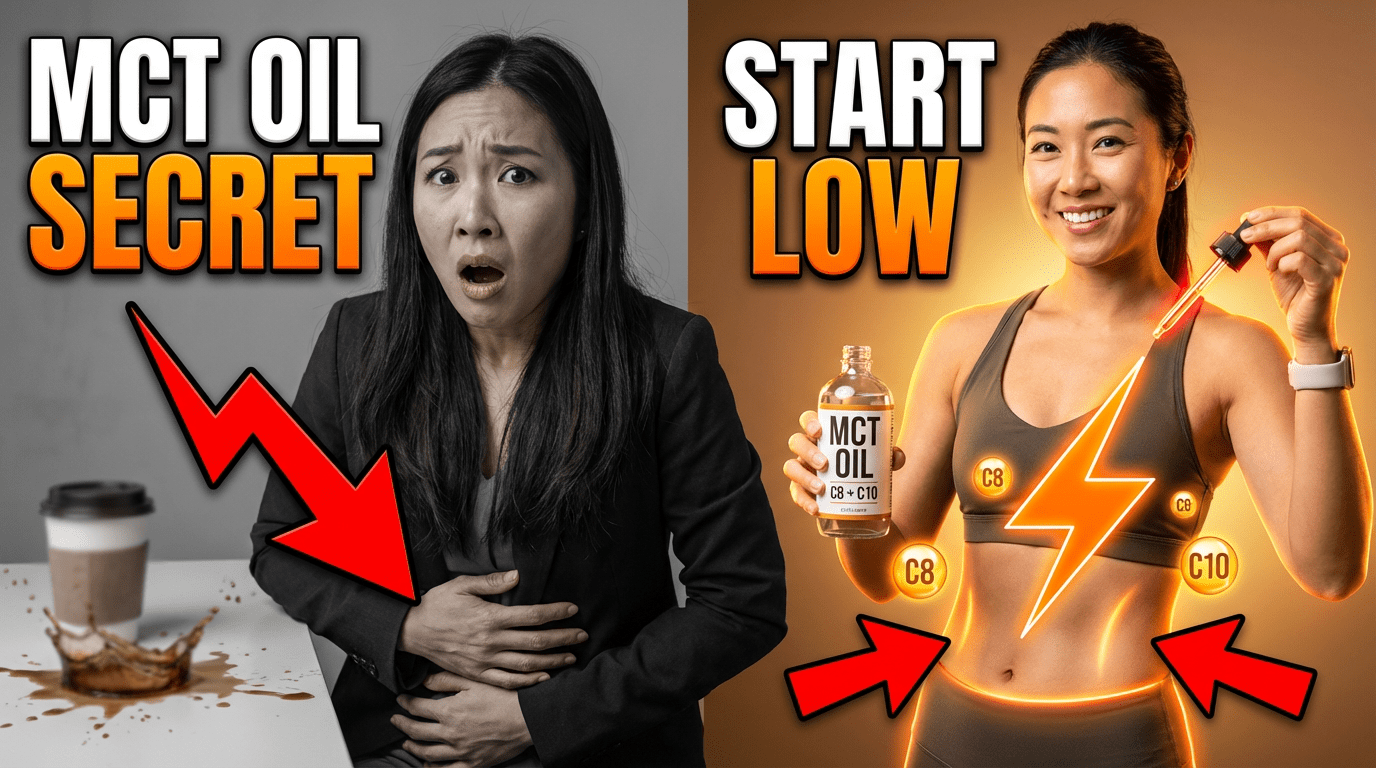
If you’ve ever tried adding MCT oil to your kopi or smoothie because someone promised “clean energy”… and then spent the next hour regretting your life choices in the toilet—yeah, you’re not alone. MCT oil sits in a weird spot in the wellness world. It’s not a miracle fat burner, but it’s also not just another cooking oil. Used strategically, it can be a genuinely convenient tool for energy intake, satiety, and even ketone support—especially for people experimenting with a lower-carb or ketogenic lifestyle. Used carelessly, it’s one of the fastest ways to trigger stomach cramps and diarrhoea (particularly in Singapore, where a rushed breakfast + kopi on an empty stomach is practically a national sport). This guide is here to make MCT oil feel simple: what it is, how it works, what benefits are realistic, what side effects are common, and exactly how to introduce it so your gut stays on your side. ---
What MCT oil is (and what it isn’t)
Definition: medium-chain fatty acids (C6–C12) and the common types you’ll see on labels
“MCT” stands for medium-chain triglycerides—a type of fat made from medium-chain fatty acids. “Medium-chain” usually refers to fatty acids that are roughly
6–12 carbons long (you’ll see this written as C6 to C12). The ones that show up most often in supplements and MCT oils are:
- C8 (caprylic acid)
- C10 (capric acid)
- C12 (lauric acid) (often discussed as “medium-chain-ish,” but it behaves more like a long-chain fat in some ways)
If you’re buying MCT oil, the label details matter because different products can be very different in practice—especially for ketone production and digestive tolerance.
MCT oil vs coconut oil vs “keto oil blends”: why labels matter
Let’s clear up a common misconception: coconut oil is not the same thing as MCT oil.
- Coconut oil contains a mix of fatty acids, including lauric acid (C12) and other longer-chain fats. It can be a fine cooking fat, but it’s not the “pure fast-lane MCT” that many keto-style plans are aiming for.
- MCT oil is usually a more concentrated source of specific MCTs—often C8, C10, or a blend of the two.
Then there are “keto oil” blends, which may combine MCTs with other oils, flavours, or fat-soluble ingredients. Not automatically bad—but you do want transparency:
- What chain lengths are included (C8, C10, C12)?
- Is it diluted with other oils?
- Are the dosages clearly stated?
If you’re the sort who likes capsules for convenience, Nano Singapore’s
MCT Oil Extreme - 180ct is an example of an MCT supplement that specifically highlights
C8 and C10 on the product page, which is the kind of label clarity you’re looking for when you’re trying to be intentional about effects (and side effects).
Calories and portions: why 1 tablespoon can quietly add a lot
Here’s the thing people don’t love to talk about:
MCT oil is still fat, and fat is still energy-dense. A typical tablespoon of oil is around
14 g, and fats provide roughly
9 kcal per gram(MCTs are sometimes described as slightly lower than typical long-chain fats, but in real life the difference doesn’t “cancel out” the calories). That means a casual “glug-glug” into coffee can easily become
100+ calories—every day—without you noticing. That isn’t a problem if:
- you’re trying to increase calorie intake (for example, you have low appetite), or
- you’re using it as a swap for other fats.
It is a problem if your goal is weight management and you’re stacking
MCT oil on top of your usual breakfast set + lunch hawker meal + snacks.
A quick comparison to help you choose the right format (and avoid surprises)
Different MCT options behave differently in your routine, your gut, and your calorie budget. Here’s a practical way to compare.
| Option | Key benefits | Best for | Notes |
|---|---|---|---|
| Option | Key benefits | Best for | Notes |
| Liquid MCT oil (C8/C10 blend) | Fast to mix into drinks; flexible dosing | People who want precise titration and don’t mind carrying a bottle | Highest “oops I poured too much” risk; most likely to cause GI upset if you start too high |
| MCT capsules/softgels | Convenient; consistent dose; easy to travel with | People with busy workdays, or anyone who wants portion control | Slower to adjust dose in tiny increments; check total MCT per serving and added ingredients |
| Coconut oil | Easy cooking fat; accessible | Cooking use (moderate heat), general dietary fat | Often higher in lauric acid (C12) and other fats; not the same as a C8/C10-focused MCT product |
| Whole-food fats (nuts, avocado, olive oil, eggs, fish) | Comes with micronutrients; supports overall diet quality | Most people as a “base” fat strategy | Not specifically MCT-focused; effects on ketones/satiety vary with meal composition |
Read that table like a “fit-to-life” guide: if your priority is digestive tolerance, formats that let you micro-dose(tiny amounts) usually win. If your priority is consistency and portion control, capsules are often easier. And if your priority is overall health, whole-food fats still deserve most of the spotlight. ---
How MCTs work in the body: the “faster route” compared with other fats
Digestion and absorption: why MCTs don’t behave like most dietary fats
Most dietary fats are long-chain triglycerides. After digestion, they’re typically packaged into particles (chylomicrons) and transported through the lymphatic system before entering the bloodstream.
MCTs are different.
Because medium-chain fats are more water-soluble, they’re often absorbed and transported more directly into portal circulation—heading straight to the liver sooner than long-chain fats do. This “shortcut” is one reason MCTs have a reputation for feeling more “immediately usable” than other fats. If you’re thinking, “So it’s like caffeine?”—not really.
Why MCTs can feel like quicker energy (without being a stimulant)
MCTs aren’t a stimulant. They don’t “force” energy the way caffeine does. What they can do is provide a fat source that many people oxidise (burn) relatively readily. In real life, that can show up as:
- fewer energy dips between meals (for some people),
- better tolerance of slightly longer gaps between meals (again, for some people),
- a sense that workouts feel a bit less “bonky” when carbs are lower.
But there are two important caveats: 1)
You still need the basics(sleep, adequate protein, hydration, a decent overall diet). MCT oil can’t rescue you from a week of 5-hour nights and kopi-caffeine as your personality. 2)
The dose makes the experience.
A small amount may feel neutral or mildly helpful. A large amount may feel like… digestive chaos.
Ketone production: why MCTs are popular in lower-carb and ketogenic lifestyles
Because MCTs reach the liver relatively quickly, they can be converted into ketone bodies more readily than many long-chain fats. That’s why MCT oil shows up in ketogenic-style approaches and intermittent fasting communities. In practice, this can matter most when:
- you’re already eating lower carb, and
- you’re using MCT oil as part of a deliberate plan (rather than as random extra calories).
If you’re eating a typical higher-carb pattern (say: kaya toast + kopi + noodles later), MCT oil can still be used—but the “ketone advantage” may be less relevant than the simple reality that it’s a calorie-dense fat. ---
MCT oil benefits and side effects: what the evidence supports (and what’s hype)
Benefit #1: Energy support (especially when you need a convenient fat source)
One of the most practical uses of MCT oil is simply this: it’s an easy way to add fat calories without cooking. That can be helpful if you:
- struggle to eat enough due to low appetite,
- need energy-dense nutrition in a smaller volume,
- are trying to maintain intake during busy periods (hello, back-to-back meetings and MRT commutes).
For Singapore routines, this often looks like:
- adding a small amount to kopi o kosong or teh o kosong,
- blending into a smoothie,
- mixing into yoghurt or oats.
Just don’t confuse “more usable fat” with “free energy.” It still counts.
Benefit #2: Ketone availability (most relevant for lower-carb eaters)
MCT oil can raise circulating ketones more than many other fats. For people doing a ketogenic lifestyle(or a lower-carb pattern), that can be useful—particularly if you’re trying to support ketone availability without dramatically increasing total fat intake across the day. That said, two reality checks:
- You don’t need high ketones to get benefits like better meal structure, higher protein, or fewer ultra-processed snacks.
- Chasing ketones with lots of MCT oil can backfire if it causes GI symptoms or pushes your calories too high.
Benefit #3: Satiety and appetite control (promising, but variable)
Some studies and reviews suggest MCTs can increase satiety and reduce later food intake compared with long-chain fats. Mechanistically, it’s plausible: faster oxidation, potential gut hormone effects, and changes in how the meal “lands.” But appetite isn’t just biology—it’s also:
- stress,
- sleep,
- meal timing,
- food environment (hawker centre smells are a powerful force),
- and the simple fact that liquids tend to be less filling than solids.
So if you’re using MCT oil for satiety, you’ll usually get the best mileage when you pair it with:
- protein (eggs, Greek yoghurt, tofu, chicken, fish),
- fibre (fruit, veg, oats, legumes),
- and a meal that you actually chew.
Benefit #4: Weight management (modest effects, and only if you “swap, not stack”)
Research comparing MCTs with long-chain fats suggests MCTs may modestly increase energy expenditure and fat oxidation in some contexts. Over time, that could contribute to small differences in body composition. But “modest” is the key word. If you add 1–2 tablespoons of MCT oil on top of your existing intake, the calorie surplus can easily override any small metabolic edge. If you replace some other fats (or reduce other calories), MCT oil may be part of a workable strategy. A simple Singapore example:
- If you add MCT oil to kopi and still have a kaya toast set, that’s stacking.
- If you add a small amount of MCT oil to kopi and skip an extra snack you don’t even enjoy, that’s closer to swapping.
When MCTs can be clinically useful (and why this should be clinician-guided)
MCTs have a history of use in clinical nutrition, especially in situations involving fat digestion or absorption challenges. Because MCTs can be easier to absorb than long-chain fats, they’re sometimes used in medically supervised diets. But this is exactly where DIY experimenting can get risky. If you have:
- known malabsorption issues,
- pancreatic disease,
- liver disease,
- or you’re on a medically prescribed ketogenic therapy,
MCT oil should be something you discuss with your clinician or dietitian—not something you troubleshoot based on TikTok.
The “saturated fat” footnote you shouldn’t ignore
MCT oil is typically rich in saturated fats. That doesn’t automatically mean “bad,” but it does mean you shouldn’t assume it’s cardioprotective. If you have:
- high LDL cholesterol,
- a strong family history of heart disease,
- or other cardiovascular risk factors,
it’s sensible to keep saturated fat in perspective and monitor your lipids over time. MCT oil can still fit—just not as an unlimited “health oil.” ---
Side effects and digestive comfort: a Singapore-friendly dosing + usage plan (plus a buyer checklist)
Common side effects: cramps, nausea, bloating, diarrhoea (and why dose matters)
The most consistent “MCT oil side effect” isn’t mysterious—it’s gastrointestinal upset. Common complaints include:
- stomach cramps,
- nausea,
- bloating,
- and diarrhoea, especially with larger doses.
This tends to be dose-related and timing-related. A big dose on an empty stomach is the classic mistake (often followed by dramatic regret somewhere between Tanjong Pagar and Jurong East).
Real-life triggers I see all the time
If you want to predict whether MCT oil will “agree” with you, watch for these triggers:
- Empty stomach + coffee: acidic + fast-moving fat can be a rough combo.
- Big first dose: your gut isn’t trained for it yet.
- Very sweet drinks: sugar alcohols, syrups, or sweeteners can add their own GI effects.
- Stress + rushing: your digestive system notices.
- Stacking fats: MCT oil on top of a high-fat meal (like creamy curry + dessert) can tip you over.
A practical “start low, go slow” plan for Singapore routines
This is the part most people skip—and it’s the part that prevents drama.
Week 1 (Days 1–3):
- Start with 1/4 teaspoon (yes, tiny).
- Take it with food, not on an empty stomach.
Week 1 (Days 4–7):
- If you’re fine, increase to 1/2 teaspoon.
Week 2:
- Move to 1 teaspoon once daily.
- If you want to use it in coffee/tea, consider having it after breakfast first, then gradually shifting earlier if tolerated.
Week 3+:
- Increase by 1/2 to 1 teaspoon every few days only if you’re comfortable.
- Many people do well around 1–2 teaspoons/day. Some go higher, but higher isn’t automatically better.
If you get diarrhoea or cramps:
- Drop back to the last comfortable dose for a few days.
- Take it with a meal that includes protein and fibre.
- Don’t “push through” GI symptoms like it’s a badge of honour.
Troubleshooting: what to try if your stomach gets fussy
If you feel nauseous:
- Try taking it mid-meal instead of before.
- Reduce dose.
- Avoid combining with strong coffee first thing.
If you get reflux/heartburn:
- Avoid taking it with very acidic drinks.
- Try it with yoghurt/oats instead of coffee.
- Keep the dose small.
If stools get loose:
- Reduce dose.
- Split into two smaller doses across the day.
- Avoid stacking with other high-fat additions.
And a straightforward safety rule: if you develop severe abdominal pain, persistent vomiting, signs of allergy, or diarrhoea that won’t settle—stop and get medical advice.
Intermittent fasting: does MCT oil “break a fast”?
It depends what you mean by “fast.”
- If your goal is a strict fast (no calories), then yes—MCT oil contains calories, so it breaks the fast.
- If your goal is appetite control or easing into a fasting window, some people intentionally use a small amount of fat as a “bridge.”
My take: decide based on your actual goal.
- For fat loss, the most important thing is still overall calorie intake and sustainability.
- For glucose control, medications and individual response matter—so tread carefully if you have diabetes or you’re using glucose-lowering meds.
How to use MCT oil in Singapore meals (without ruining diet quality)
MCT oil works best as a supporting actor, not the main character. Some practical, SG-friendly uses:
- Kopi/teh: add a small amount and stir well; expect some separation (it’s oil).
- Oats: mix in after cooking for a smoother texture.
- Yoghurt bowls: pair with fruit + nuts for a more satisfying meal.
- Soups: add after cooking (don’t high-heat fry with it).
Also:
MCT oil isn’t ideal for high-heat frying.
Many people use it as a mix-in rather than a cooking oil, to reduce degradation and weird flavours.
Heart health and cholesterol: a balanced approach (especially if you’re already worried about LDL)
If your cholesterol is a concern, you don’t need to panic about MCT oil—but you do need to be deliberate. Try this:
- Keep MCT oil to a modest dose you tolerate.
- Make your “default fats” mostly unsaturated: olive oil, nuts, seeds, avocado, fish.
- If you’re supplementing omega-3s, choose products with clear sourcing and dosing. (Nano Singapore carries omega-3 options like krill oil, but regardless of brand, look for transparency and appropriate EPA/DHA amounts.)
And if you change your fat intake pattern meaningfully, consider checking your lipid panel later to see how your body responds.
Choosing an MCT oil (or MCT supplement): a simple buyer’s checklist
This is where you protect yourself from both hype and stomach upset.
1) Chain length clarity (C8/C10/C12)
- Products that clearly state C8 and/or C10 are usually easier to evaluate than vague “MCT proprietary blends.”
- If you’re using MCT oil mainly for ketogenic support, many people prefer C8/C10-focused formulas.
2) Ingredient list transparency
- Look for a short ingredient list.
- Watch for unnecessary fillers, flavourings, or added oils (unless clearly stated and you actually want them).
3) Dosing you can control
- If you’re GI-sensitive, liquids let you increase in tiny increments.
- If you value convenience and portion control, capsules are easier.
4) Quality signals that are meaningful (not just pretty badges)
- Manufacturing standards and third-party testing matter more than vague marketing claims.
- Check whether the brand explains quality control and testing in plain language.
5) Red flags
- Promises of effortless fat loss.
- “Detox” claims that don’t match how digestion actually works.
- Labels that don’t tell you what you’re taking.
If you want to explore options, you can browse and compare labels before you buy supplements online—treat it like ingredient research, not a shopping spree. ---
Conclusion
MCT oil is one of those tools that’s genuinely useful when you respect what it is: a fast-absorbing fat source that may support steadier energy, sometimes improves satiety for some people, and can raise ketones more readily than many other fats—especially in lower-carb routines. It’s also one of the easiest supplements to overdo. Most “MCT oil horror stories” are just dosing stories: too much, too soon, often on an empty stomach. If you remember one thing, let it be this: start low, go slow, and treat it as a swap—not a bonus.
If you’d like to compare formats and ingredients at your own pace, here’s a helpful starting point: buy supplements online
Frequently Asked Questions
FAQ 1
Can I add MCT oil to kopi kosong or teh C?
You can, but start small. Coffee + MCT on an empty stomach is a common trigger for cramps or diarrhoea. If you’re new, try it with breakfast first, then experiment with timing. Also expect oil separation—stir well, or use a frother.
FAQ 2
How much MCT oil is “too much”?
There’s no universal number because tolerance varies a lot. Practically: if you’re getting loose stools, cramping, or nausea, that’s your body telling you the dose is too high for now. Also remember the calorie load—large daily amounts can easily overshoot weight goals.
FAQ 3
Does MCT oil help with “mental clarity”?
Some people report it, especially when they’re eating lower-carb and using MCTs consistently in small amounts. But it’s not a guaranteed cognitive enhancer—and it won’t replace sleep, hydration, or adequate overall nutrition.
FAQ 4
Is MCT oil safe if I have diabetes or I’m on glucose-lowering medication?
Be cautious. Changing your fat intake (especially if you’re using MCT oil to support ketosis) can shift energy balance and sometimes ketone levels. If you’re on medication, it’s wise to discuss bigger dietary changes with your clinician and monitor your response.
FAQ 5
Do capsules work the same as liquid MCT oil?
They can be similar in effect, but capsules make it harder to “micro-dose.” If your main concern is digestive tolerance, a liquid lets you increase more gradually. If your main concern is convenience and consistent portions, capsules are often easier.
References
- https://www.britannica.com/science/human-digestive-system/Fats
- https://www.healthline.com/nutrition/mct-oil-benefits
- https://nutritionsource.hsph.harvard.edu/what-should-you-eat/fats-and-cholesterol/types-of-fat/
- https://fdc.nal.usda.gov/
- https://www.naspghan.org/files/documents/pdfs/training/curriculum-resources/physiology-series/Fat_Digestion_Supporting_Document_NASPGHAN_Final.pdf
- https://pubmed.ncbi.nlm.nih.gov/32212947/
- https://pubmed.ncbi.nlm.nih.gov/12634436/
- https://pubmed.ncbi.nlm.nih.gov/25636220/
- https://nanosingaporeshop.com/products/best-mct-oil-singapore